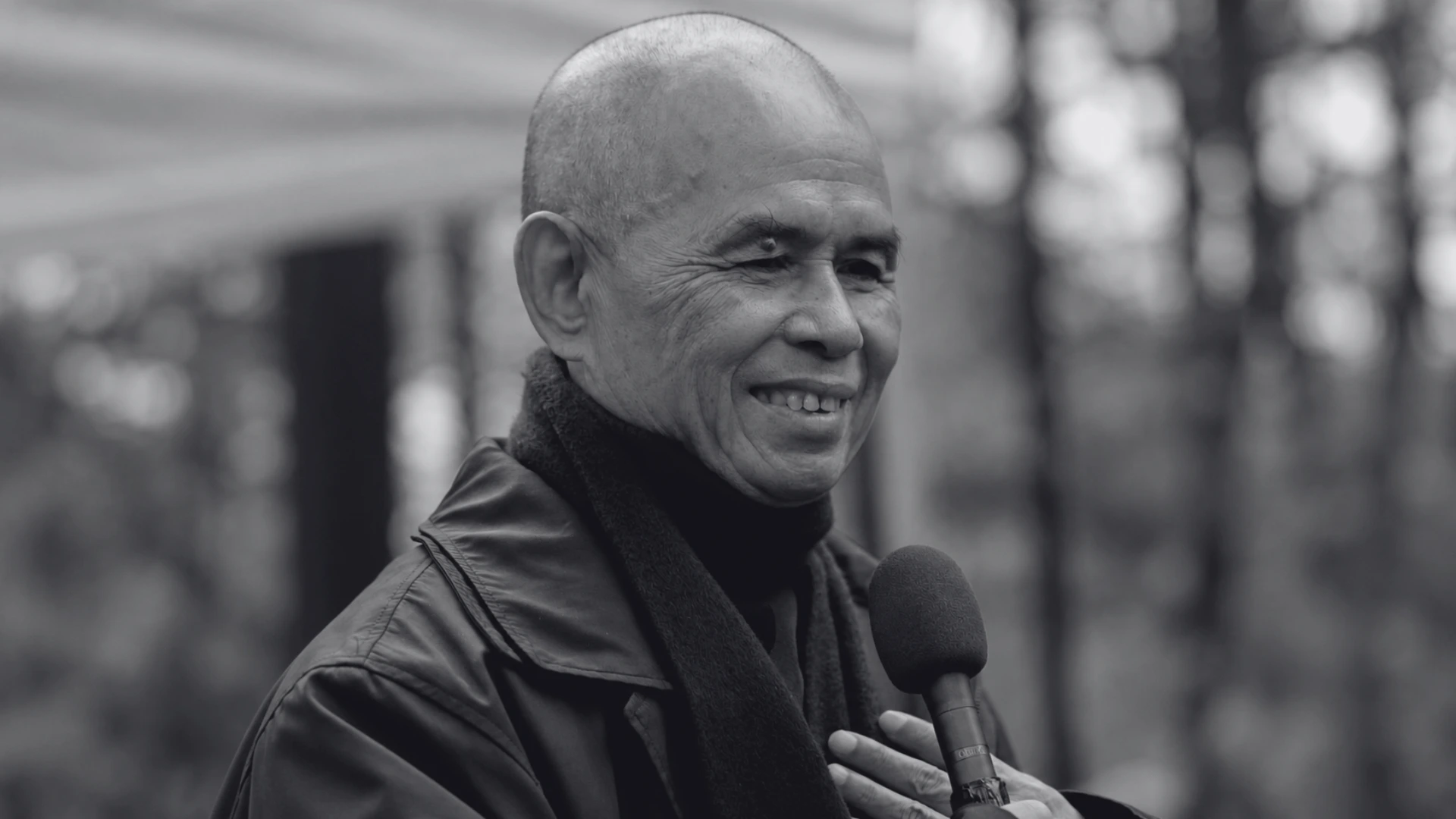
"The greatest gift we can make to others is our true presence."
Thich Nhat Hanh
Zen teacher and author
- Date
Executive Gravitas: The Work Behind Being Fully Present
posted in Leadership

Adam Kreek
Imagine a familiar leadership moment. You are about to recommend delaying a launch. You know the customer commitments, the delivery risks and the cost of waiting. You care about getting the decision right. Then a senior colleague challenges your recommendation, and some of your attention turns inward. Are you sounding confident? Talking too much? Losing the room?
In this imagined situation, the tension is recognizable: you have something useful to contribute, yet monitoring how you come across competes with the attention the conversation needs.
Backstage preparation creates the capacity to be fully present front-stage. When you have worked through the substance, practised your contribution and made room for your own reactions, more of your judgment, conviction and humanity can become available when it counts.
That is the angle on executive gravitas I want to explore: developing the capacity to meet the moment as yourself, with enough steadiness to contribute and enough openness to receive what comes back.
Prepare until you can pay attention
Useful preparation goes beyond polishing a presentation. For our imagined launch discussion, it means testing the recommendation against the evidence, understanding the trade-offs and knowing what remains uncertain. It includes considering the strongest objection and deciding what new information would change your mind.
It also means noticing your personal stake. Perhaps you want to protect your team, prove that you belong at this table or avoid disappointing someone influential. Those concerns deserve attention before they start writing your speaking notes for you.
In Authentic Gravitas, Rebecca Newton connects presence with contribution and the relationship between intention, behaviour and the impact others experience. That is a useful test for preparation: what should people understand, be able to examine or decide because you were there?
You cannot prepare every possible answer. You can prepare enough to stay engaged when the conversation departs from your plan. The meeting has apparently neglected to read your script.
Choose what the responsibility needs from you
In my developing Integrated Stewardship Theory, permeable containment describes the trained ability to hold pressure, choose what to express and channel what belongs elsewhere. You remain aware of your whole self while deciding which parts, at what intensity, serve the people and responsibility in front of you.
In the launch discussion, you might hold the urge to defend your reputation while letting your concern for the customer come through clearly. You might express conviction, acknowledge uncertainty and ask the colleague to explain a risk you have missed. Frustration may need processing with a trusted peer afterwards. An impossible deadline may need challenging in the room.
This is where authenticity and deliberate expression can work together. You can feel several things and choose which to act on. You can also let disagreement, feedback and another person's experience reach you. Presence involves movement in both directions.
Sylvia Ann Hewlett's work on executive presence highlights the tension between fitting workplace expectations and expressing one's identity. Those expectations can be biased, with unequal demands on women and people of colour. Being perceived as a leader is not the same as exercising sound leadership.
Conformity concerns social expectations. Containment concerns how we handle pressure and choose expression. They overlap, but they are different questions. Responsible containment can give you the steadiness to disagree, challenge a harmful expectation or refuse something on principle.
Gravitas therefore has range. A moment may need warmth, force, humour, stillness, vulnerability or decisive challenge. Spilling anxiety into every sentence can obscure your judgment. Withholding every sign of concern can leave people unable to tell what matters to you. The fuller explanation is in Bring Your Whole Self to Life. Bring the Right Parts to Work.
Give your body and attention somewhere to land
Body & Mind is one of the five capacities in the ViDA Leadership Operating System. It concerns the physical and psychological system carrying the leader: energy, focus, recovery, attention and state. For this practice, start with what you can notice.
Feel the support of the chair or floor. Find a posture that lets you breathe and turn towards people comfortably. Let your breathing settle without forcing it. Notice whether you are listening to the person speaking or silently preparing your defence.
Then make “energy” observable. Can people hear the conviction in your voice? Does your pace leave room for a response? Can you take in an objection and respond to its actual meaning? Warmth, alertness and engagement have visible and audible expression.
Patsy Rodenburg's approach to presence describes reciprocal attention: expressing yourself while remaining available to receive another person. Her practitioner work with breath, voice, posture and listening offers one way to explore this. The Strozzi Institute's somatic coaching starter kit offers additional centring exercises and reflection on habitual responses under pressure.
Use these as practices to explore. Physical ease sits alongside preparation, competence and sound judgment. A relaxed jaw cannot rescue a recommendation whose numbers do not add up.
Practise before it feels natural
There is a useful developmental idea inside “fake it till you make it”: you can rehearse a capable behaviour before it feels familiar. Practise making a concise recommendation, allowing a pause or acknowledging what you do not know. Keep the evidence and your level of competence truthful.
Rehearsal becomes more useful when it includes resistance. Ask someone to question an assumption you care about. Practise hearing the objection, checking your understanding and deciding whether to hold your position, revise it or seek more information. Conviction gives your contribution weight. Openness keeps it connected to reality.
Psychologists George Bonanno and Charles Burton's review of regulatory flexibility offers a relevant research framework: notice what a situation demands, draw on more than one possible response and adjust through feedback. It questions treating any single coping strategy as universally helpful.
That research and these practitioner methods inform the connection I am developing between gravitas and permeable containment. They do not establish IST, or the practice below, as a validated gravitas intervention.
With practice, attention can shift from monitoring your performance towards becoming absorbed in your contribution. You still notice people, risks and consequences. You have more attention available for them.
A practice for your next consequential conversation
Choose one real meeting and work through these six steps. Keep the experiment small enough to use.
1. Choose the moment and the contribution
Name the upcoming conversation, the decision or relationship at stake and the contribution it needs from you. Be specific: clarify a trade-off, challenge an unsafe assumption, make a recommendation or acknowledge a mistake. “Look more senior” gives you much less to work with.
2. Find where gravitas already exists
Recall a time when people naturally trusted your judgment. What were you doing? What helped you stay available? Perhaps your strength was careful preparation, directness, humour or genuine curiosity. Choose one quality to preserve. You are developing access to your strengths under pressure.
3. Notice what pressure changes
Look for changes in your body, attention, speech and behaviour. Do you speed up, over-explain, go quiet or stop asking questions? Consider what you might be trying to protect. Then look upstream: unclear authority, conflicting demands and inadequate support can all make presence harder. A useful change may involve the meeting's structure or decision rights.
4. Choose what to hold and what to let through
Name the truth, concern, conviction or warmth the situation needs. Decide what you will express, what you will challenge and what you will share or delegate. Give whatever needs private processing an actual place to go. Holding pressure indefinitely is a poor substitute for support.
5. Rehearse with resistance
Practise your contribution aloud with someone willing to offer a meaningful objection. Before responding, summarize what you heard and check that you understood it. Then make your judgment clear. Repeat once, changing one behaviour such as pace, the length of your opening or the question you ask.
6. Try it and seek feedback
Use that one change in the meeting. Afterwards, ask a trusted participant what became clearer and whether they felt able to contribute or disagree. Compare your intention with their experience. Notice the effort required, what support helped and what recovery you need before the next demand.
Make room for the work behind the moment
Return to the imagined launch discussion. The recommendation may still be challenged. You may still feel the pressure. Preparation gives you something to draw on: evidence you understand, reactions you recognize and a practised way to receive disagreement while making your contribution clear.
This is consistent with the emphasis on practice, support and recovery in the ViDA coaching philosophy. Backstage work is part of carrying responsibility well. It helps make more of you available when the room needs your judgment.
Before your next consequential meeting, what backstage work would help you be fully present when it counts?
Develop your presence where it matters
If you want support practising a consequential conversation, explore executive coaching with Adam Kreek. We can work with the responsibility you are carrying, the strengths you want to preserve and the next behaviour you want to try.
Portrait: Duc (pixiduc), Thich Nhat Hanh Marche meditative 06 (2006). Cropped, background extended and treated with Canva Slate; adapted image under CC BY-SA 2.0. Quote: Thich Nhat Hanh, Dharma Talk: True Presence, The Mindfulness Bell, December 1995.