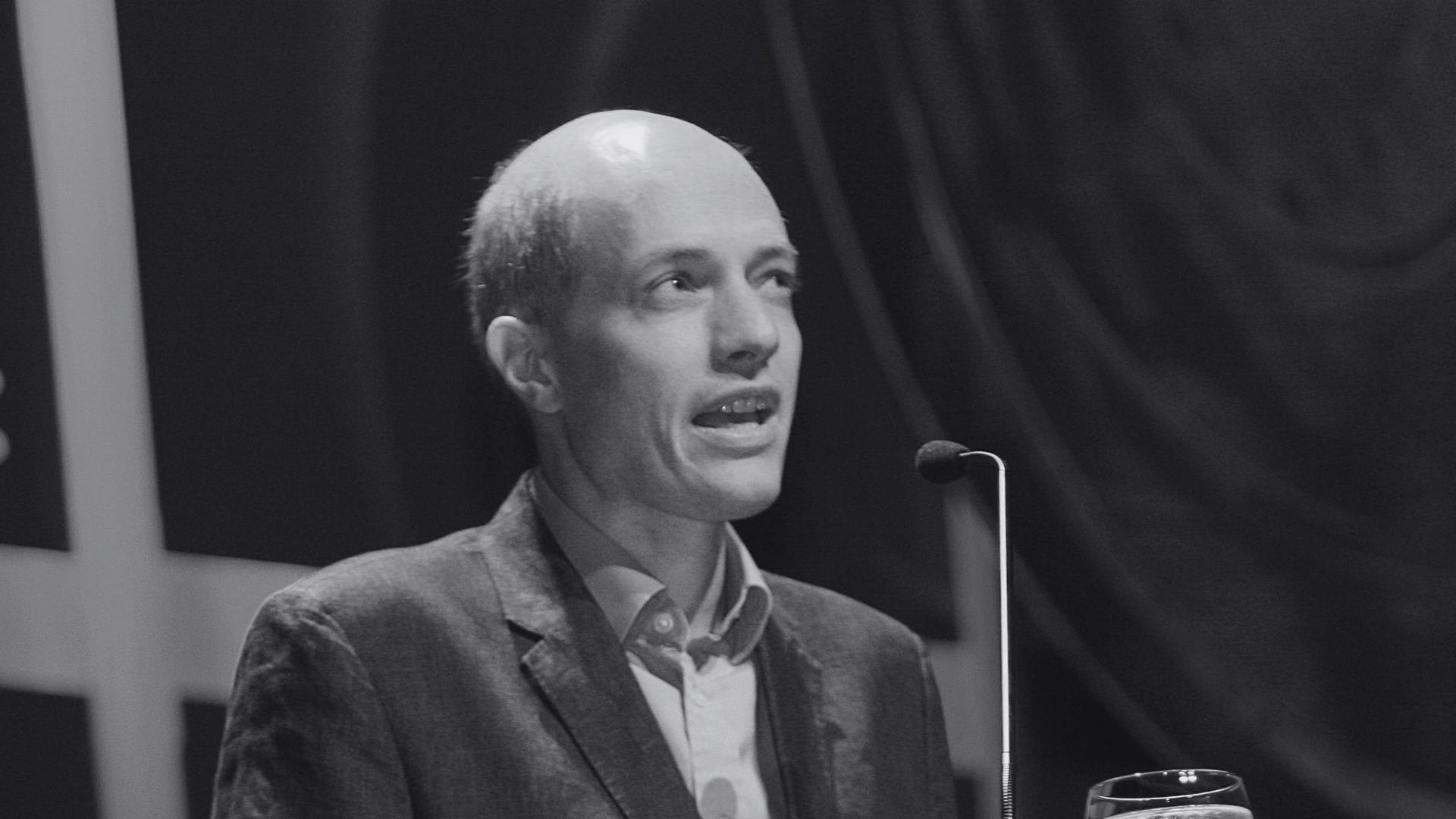
"We should feel proud of humanity’s competence and skill…"
Alain de Botton
Writer and philosopher
- Date
Built for Hard: The ViDA Coaching Philosophy
posted in Built For Hard

Adam Kreek
At ViDA, we believe in the power of possibility.
Pain, uncertainty and hard work are inevitable. When we bring meaning, purpose and lived values to the hard, we can turn discomfort into growth, effort into contribution and fear into courageous action. The stakes can be high, we can feel the fear of failure, and we can also experience profound joy, connection and achievement at the exact same time.
At ViDA, we pair high demand with high support. Together, we choose what is worth the effort, face the challenges that matter and take responsibility for our next move. Through coaching, we build the courage and capacity to do hard things, recover well and create value in line with our values.
Five principles that guide our coaching
1. There is nothing wrong with you.
You can show up as you are, with your strengths, doubts and rough edges.
Coaching helps us meet challenge with support, perspective and room to grow in our own way.
2. Change is inevitable.
Life, work and relationships keep moving, with or without our permission.
Pain, uncertainty and hard work come with the territory.
3. Proactive change is better; it strengthens our agency.
Choose a direction and take the next useful step before certainty arrives.
Act, reflect and adjust: each move helps us learn, build capacity and shape what happens next.
4. Reactive change is worse; resignation and resistance leave our potential unrealized.
Waiting until pressure forces our hand can cost us options, time and opportunity.
We may not have chosen the situation, but we can still look for what we can influence and who can help us move.
5. All behaviour, above and below the waterline, comes from a positive intention.
Get curious about what a behaviour is trying to protect or achieve, including when it causes harm.
Understanding the intention helps us find a better way to meet the need while taking responsibility for the impact.
Why Built for Hard: where difficulty meets meaning
In coaching, we may hear a phrase that helps us pause and reorient: “There is nothing wrong with you.” Then we leave a little space. Sometimes we laugh. Sometimes we can feel the relief. We have arrived carrying a difficult situation, and perhaps the suspicion that being coached means we are the problem.
We may be trying to repair a supply chain, lead through conflict or hold a business together while an industry changes around us. We may have reached a role we worked years to earn and discovered that it comes with problems we have never learned to solve. Being stretched by those demands is a very human place to begin.
I learned something about that stretch in Olympic sport. The outcome mattered enormously, and there was no guarantee. Training hurt. The work made us tired. We could give ourselves fully to the pursuit and still lose. Meaning did not remove the difficulty. It gave us a reason to engage with it.
That combination still interests me: a challenge demanding more than we currently know how to give, paired with something we care deeply about. There can be fear, exhaustion and doubt. There can also be joy, connection and the satisfaction of discovering a capacity we had not yet developed.
This is the relationship between grit and grace. High demand gives the work substance. High support helps us stay engaged, learn and recover. We can hold a demanding standard and remain deeply interested in the person trying to meet it.
Built for Hard begins there. We take the challenge seriously, and we take our capacity to grow through it seriously. Then we get to work together.
Pain: choose your hard
A worthwhile life includes disappointment, conflict, loss and effort. A worthwhile career does too. The work we once imagined would make everything fall into place can become a source of deep satisfaction and considerable pain, sometimes before lunch.
We add another burden when we believe this means something has gone terribly wrong. We have the difficult conversation to face, plus our resentment that the conversation is necessary. We have a setback to work through, plus the belief that competent people should have outgrown setbacks by now.
There is relief in admitting that hard is here. We can put some of the energy spent wishing it away into deciding what to do with it. That is what I mean when I encourage people to stop fighting the hard.
The pain of now and the pain of later
Imagine a leader who knows a colleague is missing commitments. Raising the issue means risking tension, hearing an uncomfortable explanation and perhaps admitting that the expectations were never clear. Avoiding it offers immediate relief. Meanwhile, other people pick up the work, resentment grows and the eventual conversation becomes heavier.
Choose your hard. There is the hard of addressing the issue now and the hard of living with what avoidance creates. The first may be uncomfortable. The second can consume months of attention and trust.
Values help us decide which discomfort is worth carrying. If fairness matters, we may need to name an uneven workload. If honesty matters, we may need to tell someone what we have been politely withholding. If care matters, we may need to hold the standard while changing the move so the conversation is both clear and humane.
There is judgment involved. Some difficulty asks for persistence. Some asks for a boundary, a different approach or an exit. Coaching gives us room to examine the actual cost and purpose of the effort, rather than assuming that enduring more is always the answer.
Get curious about what the behaviour is doing for you
In this coaching context, the waterline describes how we respond under pressure. Above the waterline, we can be curious, deliberate and constructive. Below it, we may protect ourselves through control, pleasing, blame or withdrawal. These are patterns we can notice and change, rather than permanent descriptions of who we are.
A controlling leader may be trying to protect quality. Someone who agrees to everything may be trying to preserve connection. A person who withdraws may be trying to avoid another painful conflict. The intention makes sense from somewhere inside the person, even when the behaviour damages the very thing they want to protect.
Our fifth principle gives us a starting point for inquiry: look for what the behaviour is trying to protect or achieve. We treat that intention as something to explore together, not something we can know from the outside. Understanding it does not excuse harm or remove the need for a boundary. What are we trying to secure? What are we afraid of losing? What effect is our response having on other people?
Exploring shadow values can make an uncomfortable motive easier to name. Wanting recognition, influence or security gives us something useful to work with once we can see it clearly. We can seek recognition through contribution, create security through preparation and protect quality through clear agreements. The need can find a more useful expression.
Pain can teach us something about what matters. We can listen, respond and still make room for joy. Both can be present in the same meaningful life.
Uncertainty: act without a guarantee
Most consequential decisions arrive with missing information. We can prepare carefully for a new role, a difficult conversation or a business decision and still be unable to control the result. Waiting for certainty can become a very respectable way of staying stuck.
Values give us a way to orient ourselves when the route is unclear. They help us answer questions such as: What am I trying to protect? What am I prepared to work for? What would make this decision feel honest, even if the outcome disappoints me?
That is different from assuming every change is a crisis. A changed plan may be inconvenient without violating anything fundamental. Knowing the difference helps us put our effort where it belongs. We can adjust a method while keeping faith with the purpose behind it.
Seek the kind of failure that teaches
My teammate Jake Wetzel helped shape the thinking behind my I Seek Failure talk. If we only work where success is assured, we leave part of our capacity unexplored. At some point, development asks us to attempt something we cannot yet reliably do.
We still need to distinguish a thoughtful attempt from preventable carelessness. A noble failure can follow preparation, a worthwhile aim and an honest effort. A frail failure may follow ignored information, avoidable shortcuts or the refusal to ask for help. Both deserve examination. They ask different things of us afterwards.
Consider testing a new way of running a meeting. We can explain the purpose, agree on a short trial and ask people what improved. If the format fails, we have learned something at a manageable cost. Committing the whole organization to an untested change while dismissing concerns is a different decision. Courage does not make preparation optional.
After an attempt, we make time to reflect. What happened? What did we expect? What will we practise or change? Reflection helps the experience become part of our judgment, rather than a permanent argument against ourselves.
Winning and losing have both changed meaning for me over time. An Olympic result feels different when I can place it in the context of the whole journey. That perspective does not cancel the ache of a loss or the joy of a win. It gives the experience a place within a larger life.
We can care intensely about an outcome and remain capable of continuing if it goes another way. That is a useful kind of freedom. It lets us enter uncertain work with commitment, curiosity and enough room to learn.
Hard work: build momentum and recover
We do not reach our potential without working hard. There are skills to practise, decisions to make and ordinary tasks that need doing again. The work may be meaningful and still leave us tired.
I distinguish hard work from hard, hard work. The second includes the effort of doing the task and the effort of resisting it. We are pushing through the work while arguing internally that it should not be necessary, or pursuing something we no longer believe is worth the cost.
Sometimes we need to do an unappealing task because it serves a larger commitment. A leader who values reliability may need to review an awkward process, clarify a promise or follow through on a conversation they would happily avoid. Connecting the task to that value can help them stay with it.
Other times, the resistance points to a real mismatch. We may be working extraordinarily hard to meet someone else’s definition of success. Coaching helps us examine the difference. The question becomes: what does this effort serve, and do I still choose it?
Let practice build confidence
Confidence often grows after we begin. We commit to a useful action, find the courage to try it and develop competence through repeated practice. As our ability becomes more reliable, confidence has something solid to rest on.
A leader learning to delegate may feel clumsy at first. They have to explain an outcome, agree on a standard and resist stepping back in at every sign of difficulty. Repetition gives them information: where their instructions were vague, where the other person needed support and where their own impatience created rework.
This is part of what I call habitual momentum. Meaning helps us return to the work; repetition makes the next step more available. We do not have to settle the whole future each morning. We can attend to the next ten steps in front of us.
My dad’s familiar reminder still helps: “By the inch, it’s a cinch; by the yard, it’s too hard.” A small step does not make the goal small. It gives us a way to work on it today.
Recover as hard as you work
You can always push harder until you can’t. That limit deserves attention before it makes the decision for you.
Jim Loehr and Tony Schwartz’s The Power of Full Engagement offers a useful perspective: performance depends on how we manage and renew energy, as well as how we spend time. Their framework pairs energy expenditure with recovery. It gives renewal a deliberate place in the work.
In practice, that might mean protecting sleep during a demanding project, leaving space after a difficult day, moving our bodies, taking an actual break or spending time with people around whom we can relax. The useful question is what helps us return able to pay attention, make decisions and treat people well.
Recovery needs a place in the calendar and in the expectations we set with others. If every week is an exceptional week, we have probably found the pattern. We can plan for it more honestly.
Ambition also becomes easier to carry when we can want an outcome without needing it to prove that we matter. Want the role, the result, the achievement. Work for it. Keep enough of your life in view to remember why you wanted it in the first place.
Action and support: take the next step together
Possibility becomes useful when we do something with it. A conversation, a small experiment, a clear request or a decision to stop an unhelpful pattern can give the next stage of the work somewhere to begin.
We can think ourselves deeper into fear when every possible outcome stays inside our own head. A considered action brings us into contact with reality. We discover what another person actually thinks, how a process actually works or which part of the task actually needs help.
This is one useful connection to Henry Mintzberg and James Waters’s work on deliberate and emergent strategy. Strategy can develop as patterns emerge from action and learning. We can have a direction, pay attention to what happens and refine our approach as we learn. The plan becomes more informed through contact with the work.
Proactive change gives us more opportunity to do that learning before pressure forces a decision. Reactive change can leave us with fewer options and a higher cost. We all know the temptation to delay something difficult. Resignation becomes costly when delay settles into a belief that nothing we do could matter.
We can look carefully at that belief together. Can we change the situation, renegotiate a commitment, leave, ask for help or try a different response? Some constraints are real. Even then, there may be a choice about how we prepare, where we direct our attention or whom we bring into the problem. A small amount of influence is still worth using.
Someone beside you changes the experience
I have been reminded of this in the cold Pacific Ocean. The water is uncomfortable. Going in with friends does not change its temperature, but it changes the experience of entering it. We are choosing to face the discomfort together.
The same principle matters in work. A difficult conversation can become more manageable after we rehearse it with someone we trust. A complicated decision can become clearer when another person helps us test our assumptions. A heavy workload can change when we finally ask who else needs to be involved.
We often move too quickly to “How will I do this?” There is another useful question: “Who can help?” That person might bring expertise, perspective, encouragement or the willingness to challenge the story we have been telling ourselves.
High support includes that challenge. In coaching, we listen closely, examine patterns and make room for the conversation that keeps getting postponed. Together, we can make the next move specific enough to try and clear enough to learn from.
Motion matters more than perfect action when the next step is thoughtful, proportionate and open to feedback. Make the call. Ask the question. Test the approach. Notice what changes, and use that information in the next move.
What matters enough to do the hard work for?
You may already know the challenge this brings to mind. It could be the decision you keep revisiting, a strained relationship, the responsibility you are growing into or the ambition that still matters after you have tried to talk yourself out of it.
Give it a little attention. Name what is hard and why it matters. Then work through five practical questions:
- What am I trying to create, protect or contribute?
- What discomfort or uncertainty will I need to face?
- What is the smallest useful action I can take next?
- Who can support me, challenge me or share the work?
- What recovery will help me keep going well?
Let the answers lead to a real commitment. Choose the action, decide when you will take it and make the request for support. You can learn from what happens next.
Fear and doubt are the taxes we pay to experience the incredible. There is work ahead, and the outcome may matter deeply. There is also possibility: in what we can learn, in the contribution we can make and in the people beside us.
Do hard things well, and stay human.
At ViDA, we coach leaders through the challenges of work, life and self. Bring a challenge that matters to you. Together, we will work on what it demands, what you can influence and the support that will help you act. Explore executive coaching with ViDA.
Portrait: Alain de Botton at Fronteiras do Pensamento, Porto Alegre, 2011, by Fronteiras do Pensamento, via Wikimedia Commons. Cropped and treated in monochrome; original and adaptation licensed CC BY-SA 2.0. Quotation: Alain de Botton, Art as Therapy Q+A, reflecting on human skill in the face of difficult conditions.
