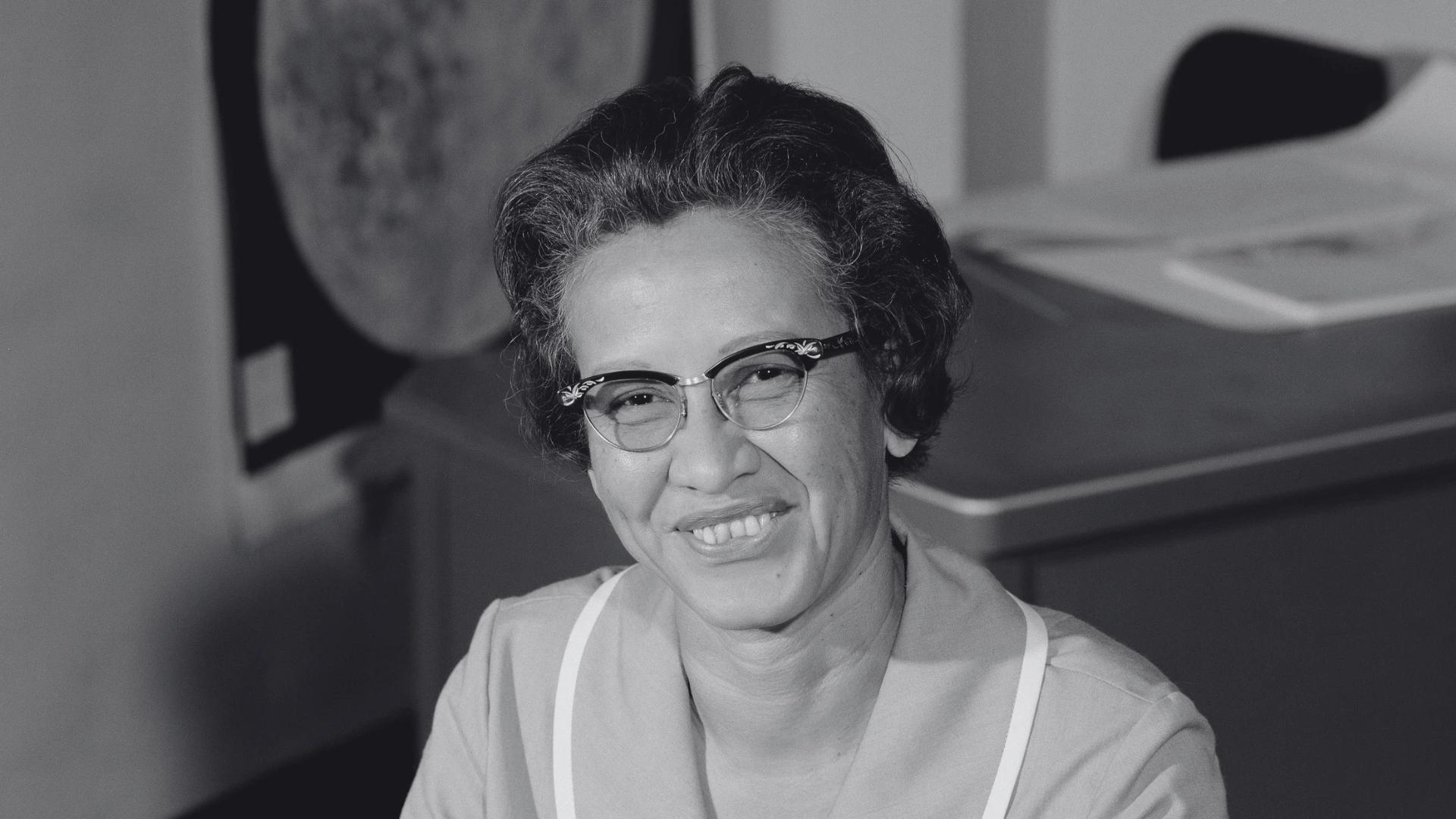
"I asked questions; I wanted to know why."
Katherine Johnson
Mathematician and spaceflight pioneer
- Date
High-Stakes Decisions: Turn Gut Feel Into a Repeatable Leadership Process
posted in Business Coaching

Adam Kreek
When the stakes rise, a clearer process gives our courage somewhere useful to go.
We can be capable, prepared and deeply committed to a decision, and still find ourselves asking: Am I ready for this? Should we move now? Is this a sound choice, or am I trying to prove something?
A major hire, a new product or a change in direction can bring that tension into focus. The opportunity matters. So do the people, money and trust we could put at risk. We want to act with conviction, while leaving enough room to notice what we have missed.
What looks like one bold decision is often a whole pile of smaller ones hiding underneath. Making those choices visible gives us something we can examine, practise and improve together.
Give our instincts a fair hearing
Experience matters. An instinct can carry years of observation that we have not yet put into words. I want us to take that information seriously and get curious about what it contains.
When we say, “I trusted my gut,” there are useful questions underneath. What did we notice? Which previous experience felt relevant? What evidence would make us reconsider? How much of our urgency comes from the situation, and how much comes from our discomfort with waiting?
Sometimes our judgment is well informed. Sometimes “gut feel” is habit, fear or an attractive story wearing a sharp blazer. We give ourselves a better chance of telling the difference when we can explain our thinking to someone willing to question it.
Katherine Johnson’s insistence on understanding the questions behind the work is a useful example. In NASA’s account of her career, she describes asking why, seeking context and joining discussions that had previously excluded women. Her example invites a practical question for our own work: do we understand the reasoning well enough to challenge it?
Make the decision process visible
We often frame a difficult choice as a test of confidence. There may also be a knowledge gap, a capacity problem or a missing conversation. A decision map helps us see which part needs attention before we prescribe more toughness.
Start with one consequential decision. Write down how we are actually approaching it, including the hurried email, the person we keep consulting and the concern we keep avoiding. An honest map gives us more to work with than an impressive description of how decisions ought to happen.
Look for six elements:
- Trigger: What starts the process? A deadline, a customer request, an opportunity or a problem we can no longer ignore?
- Action: What do we do first, and what happens next? Capture the observable steps.
- Decision: Where do we choose between options? Include the choice to wait, reduce the commitment or stop.
- Question: What are we trying to answer at each point? What have we assumed without checking?
- External input: Whose knowledge, evidence or challenge do we need before committing?
- Review: When will we examine what happened, and what would cause us to change course?
The map may feel annoyingly detailed at first. Stay with it long enough to find the choice that was hiding inside an automatic habit. Perhaps we commit before checking capacity. Perhaps we ask three people who agree with us and avoid the fourth. Perhaps a deadline is real, but the demand to decide in the next ten minutes is our own invention.
This connects with leading above and below the waterline. In that framework, the waterline helps us notice whether we are responding with curiosity and responsibility or reacting through control, avoidance or defensiveness. These are patterns we can examine, rather than fixed descriptions of who we are.
Turn a concern into a decision rule
Consider a hypothetical founder deciding whether to hire a senior leader. The candidate is impressive, the team is stretched and the founder wants relief. “We need to move quickly” may be entirely reasonable. It also leaves several decisions unfinished.
What result must the role deliver? Which evidence shows that this person can do the work? Who will test the assumptions? Can the business support the commitment if growth is slower than expected? What would make us pause even if we like the candidate?
A useful rule might be: before making an offer, we agree on the first six months’ outcomes, check the relevant experience and have someone outside the hiring conversation challenge our reasoning. That rule creates a visible point of responsibility. It also gives the team something more useful than trying to read the founder’s mood.
The rule needs to fit the consequences. A small, reversible experiment may need a short conversation and a review date. A decision that affects someone’s livelihood or commits substantial resources deserves more care. Speed is one consideration; the cost of being wrong is another.
We can also name the value we are trying to serve. Growth may call us forward. Fairness may ask us to consult people who will carry the work. Stewardship may require us to limit the downside. A sound process makes those tensions discussable before enthusiasm settles the argument.
Build agency through specific practice
Specificity gives us a place to act. We can improve one question, one threshold or one handoff. That is much easier to practise than a general instruction to “be more confident.”
There is a useful connection here to Self-Determination Theory, developed by Edward Deci and Richard Ryan. Their work identifies autonomy, competence and relatedness as important psychological needs: a sense of willing ownership, growing capability and connection with others. Supporting these needs can help people engage more fully in their work.
A shared decision map gives us a practical way to work on those conditions. We can help shape the process, practise a particular skill and ask colleagues to improve our thinking. That is a coaching application of the theory, rather than a guarantee that a worksheet will improve performance. My leadership motivation toolkit explores these conditions in more detail.
Mental rehearsal can make the next move more concrete. Imagine the moment someone challenges the recommendation. Notice the response we are tempted to make, then rehearse the behaviour we want to try: pause, ask what they see, explain our assumptions and check what would change the decision.
We can practise that conversation aloud with a colleague. The aim is to make a useful response easier to reach when pressure arrives. We still need evidence, judgment and feedback from the real situation.
Carry the pressure without passing it around
In my working model of leadership containment, we take responsibility for how our pressure affects the people around us. That can mean pausing before a reactive email, admitting what we do not know or asking for support before we overcommit.
The early signs are often ordinary. We interrupt. We rush the discussion. We defend an idea before understanding the concern. We keep adding work because saying no feels uncomfortable. Noticing one of those patterns gives us an opportunity to change the next move.
A simple practice is to name the pattern, pause, identify the missing information or support, and test a different response. If we tend to rush, we might write down the decision criteria before the meeting. If we become defensive, we might ask someone to explain the strongest case against our preferred option.
We do not need to become perfectly calm before making a decision. We do need enough room to think, listen and take responsibility for the consequences.
Make good judgment easier to share
When an important decision depends entirely on one person’s instincts, the rest of the organization has little opportunity to learn from it. People wait for an answer, work around an unexplained choice or return to the same leader when a similar problem appears.
Documenting the reasoning makes judgment easier to discuss and transfer. A colleague can see what mattered, which assumptions were uncertain and where they have authority to act. That can reduce avoidable rework and make the business less dependent on one person being available for every call.
This is one part of building a business that can carry more together. We keep the experience of capable leaders and make more of it available to the team.
At the review, separate the quality of the process from the result. A carefully considered choice can turn out poorly. A careless choice can get lucky. Ask what we knew at the time, what we missed and what we will change. Otherwise, the latest outcome can teach us the wrong lesson.
Try this with the next consequential choice
Choose one upcoming decision and invite someone you trust to work through it with you. Sketch the actual process, then ask:
- What are we trying to achieve, and which values need a place in the decision?
- Where are we relying on experience, and where are we making an assumption?
- What information or perspective could change our minds?
- What would make us proceed, pause or stop?
- Who is responsible for the decision, and who needs to be involved before it is made?
- When will we review the result and the reasoning behind it?
Choose one improvement that we can actually use: a written threshold, an independent check, a better question or a short rehearsal of the difficult conversation. Keep it simple enough to practise, and specific enough to learn from.
Pressure, fear and ambition are part of being human. We can make room for them while building a process that helps us act with care. The useful question becomes: Can we see our thinking clearly enough to improve it together?
Do hard things well, and stay human.
I’m Adam Kreek, executive business coach, Olympic gold medalist and author. At ViDA, we help leaders work through consequential decisions with clearer thinking, practical tools and support. If there is a decision you would value working through together, explore executive coaching with ViDA.
Portrait: Katherine Johnson in 1966, NASA; restored by Adam Cuerden, via Wikimedia Commons. Public domain in the United States; cropped and treated in monochrome. Quote: Katherine Johnson, in Katherine Johnson: A Lifetime of STEM.
