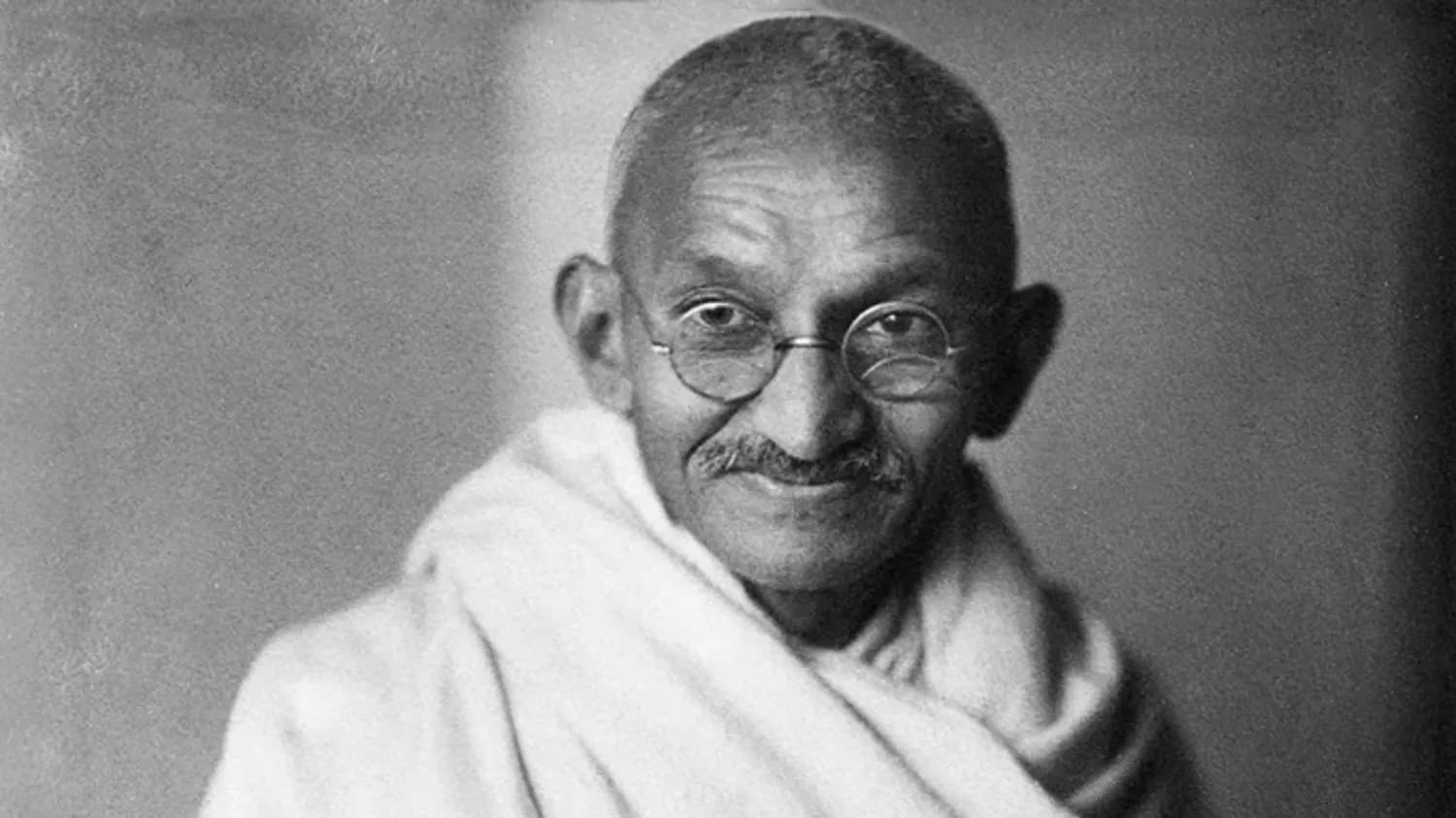
"A ‘No’ uttered from the deepest conviction is better than a ‘Yes’ merely uttered to please, or worse, to avoid trouble"
Ghandi
Contained Leader
- Date
Leadership Containment: The Quiet Work of Holding a System Together
posted in Leadership

Adam Kreek
A working theory for leaders who want to serve people well—especially when life gets heavy.
When leadership stops being abstract
In the wake of the tragedy in Tumbler Ridge, B.C. (Feb 10, 2026), I found myself in conversations with principals and vice principals that I won’t forget. (Royal Canadian Mounted Police)
Not the “how do we improve performance” conversations.
The other kind.
The ones where a leader has to walk back into a building that carries fear, grief, anger, confusion, and questions no one can answer cleanly. Where every adult in the room is trying to hold it together for the kids, while privately wondering if they’re held together at all.
I’ve visited hundreds of schools across Canada and the U.S. over the years, speaking to students and staff. One thing became obvious early: the leadership of the principal doesn’t just shape policies; it shapes the felt sense of a school. You can feel it in the hallways. How teachers talk in the staff room. Whether kids are calm or chaotic. In whether the whole place feels like it’s bracing… or breathing.
And in moments like this, the principal’s job becomes something most people never see.
It’s not just decisions.
It’s containment.
(If you’ve ever wondered why principals look ten years older by June… this might be one reason.)
A term from psychology that leadership needs
In psychology, containment is a concept from object relations theory: the caregiver (or therapist) helps growth and reduces anxiety by acting as a “container” for overwhelming emotion. (APA Dictionary)
A related idea is the holding environment: a space that allows people to face intense emotion without becoming overwhelmed. (APA Dictionary)
Leadership has its own versions of this. In Adaptive Leadership, Heifetz describes the leader’s job as building a holding environment—a space that is safe enough to function and uncomfortable enough to grow.
And in organizational research, Kahn describes “holding environments at work” as the relational and structural supports that help people keep functioning under stress. (ici-ici.ca)
So no—there isn’t one universally branded “Containment Theory of Leadership.”
But the ingredients are already in the literature.
What I’m offering here is a working theory that combines those ingredients with the frameworks I use in coaching: values, waterline leadership, competing values, and the reality of rising scope.
The core idea
As your scope increases, your job shifts:
You’re not only responsible for your own performance.
You become responsible for the emotional and psychological climate that allows other people to perform.
And that requires a skill most leadership training barely names:
Leadership Containment = the ability to contain yourself and contain the environment so the group can stay safe enough to function, and brave enough to adapt.
This builds directly on ideas I’ve written about before:
- Leading above and below the waterline (awareness of reactivity and recovery). (ViDA Coaching)
- Conflicting values and their shadows (values tension as a normal condition of leadership). (ViDA Coaching)
- Values vs principles (values are the compass; principles are the playbook). (ViDA Coaching)
- Understanding scope (when everything becomes your problem, alignment becomes your job). (ViDA Coaching)
Now I want to connect them into one model you can actually use.
The Leadership Containment Framework
This model has two arenas and four practices.
The two arenas
1) Front-stage leadership (public arena)
Where you are in role. People are reading your nervous system like it’s the weather report.
2) Back-stage integration (private arena)
Where you metabolize what you can’t responsibly process in public.
This matters because the popular advice to “bring your whole self to work” is half right and half dangerous.
You should bring your aligned self to work.
You should not bring your unprocessed self to work.
Leadership requires bounded authenticity: real, human, honest—without dumping the weight of your inner chaos onto the people who need you steady.
The four containment practices
1) Contain the Self (internal containment)
Before you can stabilize a system, you need a way to stabilize you.
This is where your “below the waterline” patterns show up—control, pleasing, withdrawal, fight/flight. (ViDA Coaching)
It’s also where Jung’s “shadow” concept becomes practical: the disowned parts of us don’t disappear. They leak. (APA Dictionary)
A principal example
It’s 6:30 a.m. The building is quiet. The principal sits alone in their office, not to “power pose,” but to do something more important:
They get honest.
- “What am I feeling?”
- “What am I afraid of?”
- “What story am I telling myself?”
- “What value must lead today—care, courage, clarity, stability?”
- “What principle will I follow when I get triggered?”
This is a simple but underrated leadership move:
Name it privately, so it doesn’t own you publicly.
2) Contain the Room (relational containment)
In crisis (or even just during conflict), people don’t need a leader who has all the answers.
They need a leader who can hold the emotional reality without becoming reactive, dismissive, or performative.
This connects to the research on psychological safety: the felt permission to speak, ask, admit, and learn without punishment. (Massachusetts Institute of Technology)
A principal example
The staff meeting starts. People are raw. Some are angry. Some are silent. Some are trying to “be strong” and failing.
Containment here looks like:
- Naming reality plainly (without dramatizing it)
- Establishing clear behavioural norms for the room
- Allowing emotion to be expressed without letting emotion run the meeting
- Keeping the purpose visible: “We’re here to protect the kids, their families and support each other.”
A line that often helps in these moments:
“Today isn’t about being fearless. It’s about being steady enough to be useful.”
(That’s the kind of sentence that sounds obvious until you’re the one saying it while your hands are shaking.)
3) Build the Holding Environment (system containment)
This is where leadership becomes architecture.
It’s not only what you say. It’s what you set up:
- communication channels
- decision rights
- meeting cadences
- rituals and routines
- boundaries and roles
- predictable next steps
This is the “holding environment” idea translated into operations. (EdRedesign)
A principal example
In the days after a traumatic event, the principal doesn’t just “be supportive.”
They build a structure that reduces chaos:
- A daily update rhythm (even if the update is “we don’t know yet”)
- A clear process for parent communication
- A plan for staff coverage so exhausted teachers can breathe
- Coordination with district supports
- A “how we handle rumours and social media misinformation” protocol
- A visible re-commitment to school values and principles (not as posters—as actions)
This is where values become real:
Not only in speeches.
In systems. In a flexible structure.
4) Ensure the Container is Contained (who holds the leader)
This is the one almost nobody teaches, and it’s the reason good leaders burn out.
If your job is to contain the system… who contains you?
Kahn’s work on holding environments points to the need for leaders to have their own holding structures, not just to survive, but to keep making good decisions. (ici-ici.ca)
A principal example
After the building is quiet again, the principal has a back-stage plan:
- a peer principal they can talk to without posturing
- a district leader who can carry some weight
- a coach or therapist who can hold the hard stuff
- practices that return them to baseline (exercise, journaling, prayer, walking, stillness)
This is not indulgence.
It’s maintenance. It is resilience priming, and a core part of your leadership work.
If you don’t build back-stage containment, you will unconsciously use your front-stage arena as your therapy session.
That rarely ends well.
Why this matters more as you move up
In my post on scope, I wrote about how expanding responsibility changes everything. (ViDA Coaching)
Here’s the containment angle:
- At low scope, your reactivity mostly affects you.
- At high scope, your reactivity becomes a weather system that affects everyone.
The higher you go, the more you need:
- self-awareness (waterline discipline) (ViDA Coaching)
- values clarity (and honesty about shadow values) (ViDA Coaching)
- principles and routines (so you don’t improvise under pressure) (ViDA Coaching)
- support structures (so you don’t carry it alone) (ici-ici.ca)
Devil’s advocate: where “containment” can go wrong
A working theory isn’t worth much if it can’t survive critique.
Here are three ways this concept can be misused—and how to guard against them:
1) Containment can become suppression
Containment is not “stuff it down and smile.”
Containment is: process the load you have chosen to carry somewhere responsible, so you can act with choice and composure in the arena.
2) Containment can become paternalism or Maternalism
The job is not “I contain you.”
The job is: I contain myself, and I build conditions where we can face reality and do the work together.
3) Containment can become identity erasure
Boundaries and privacy are healthy.
But a culture that demands people hide their core identity to be “professional” is not containment. It can be unhealthy masking. The leader must be judicious in how much of their identity they bring to work and public life, and how much they save for their private life.
A good containment model must be paired with psychological safety and dignity. (Massachusetts Institute of Technology)
A practical mini-checklist for leaders
If you’re leading through stress, conflict, or change, ask:
- Am I above or below the waterline right now? (ViDA Coaching)
- What value tension is present (security vs change, care vs accountability, etc.)? (ViDA Coaching)
- What principle will guide my behaviour today? (ViDA Coaching)
- What structures will reduce chaos and increase stability? (ici-ici.ca)
- Who holds the leader (and is that support strong enough)? (ici-ici.ca)
Related reading on ViDA (if you want the building blocks)
- Leading Above and Below the Waterline (ViDA Coaching)
- Conflicting Values and Their Shadows (ViDA Coaching)
- Values vs. Principles (ViDA Coaching)
- The 7 Responsibilities of Leadership (ViDA Coaching)
- Understanding Scope (when everything becomes your problem) (ViDA Coaching)
- The Leadership River (Leadership Pipeline, modernized) (ViDA Coaching)
- Immunity to Change (why your reflexes beat your intentions) (ViDA Coaching)
- How to Lead with Grit and Grace (ViDA Coaching)
External links (for deeper study)
- APA Dictionary: Containment (APA Dictionary)
- APA Dictionary: Holding Environment (APA Dictionary)
- Kahn (2001): Holding Environments at Work (PDF) (ici-ici.ca)
- Heifetz: Adaptive leadership and building a holding environment (PDF) (EdRedesign)
- Edmondson (1999): Psychological Safety and Learning Behavior in Work Teams (PDF) (Massachusetts Institute of Technology)
- Bowen Center: Differentiation of Self (thebowencenter.org)
- Schwartz (2012): Overview of Schwartz Theory of Basic Values (PDF) (ScholarWorks)
- Richard Schwartz: IFS overview (Founder page) (ifs-institute.com)
—
I’m treating Leadership Containment as a working theory—because it feels true in the real world, it has roots in strong psychology and leadership literature, and it solves a modern confusion: how to be both human and responsible when other people’s stability depends partly on yours. If you got this far, I'd love to hear if this resonates with you. Reach out to me through this website or LinkedIn.
–––––
Adam Kreek and his team are on a mission to positively impact organizational cultures and leaders who make things happen.
He authored the bestselling business book, The Responsibility Ethic: 12 Strategies Exceptional People Use to Do the Work and Make Success Happen.
Want to increase your leadership achievement? Learn more about Kreek’s coaching here.
Want to book a keynote that leaves a lasting impact? Learn more about Kreek’s live event service here.