
"Assertiveness is how kind people stop abandoning themselves."
Adam Kreek
Founder Build for Hard
- Date
How to Confront an Aggressive Boss Without Becoming Aggressive
posted in Built For Hard

Adam Kreek
There are moments at work when the pressure arrives without warning.
You ask a simple clarifying question. You raise a small risk. You name a dependency.
And suddenly, the response comes back hotter than expected.
A sharp message.
A public correction.
A rapid-fire thread.
A tone that feels disproportionate to the issue.
In that moment, many thoughtful leaders freeze. Not because they are weak. Not because they lack confidence. But because the moment is unpredictable, the power dynamic is real, and their nervous system is trying to keep them safe.
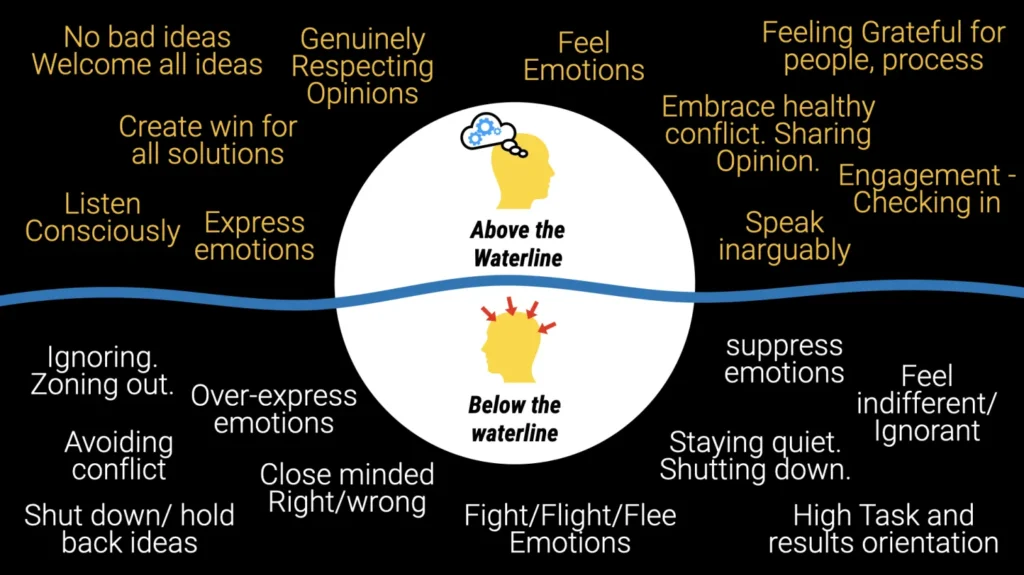
This is where many people drop below the waterline.
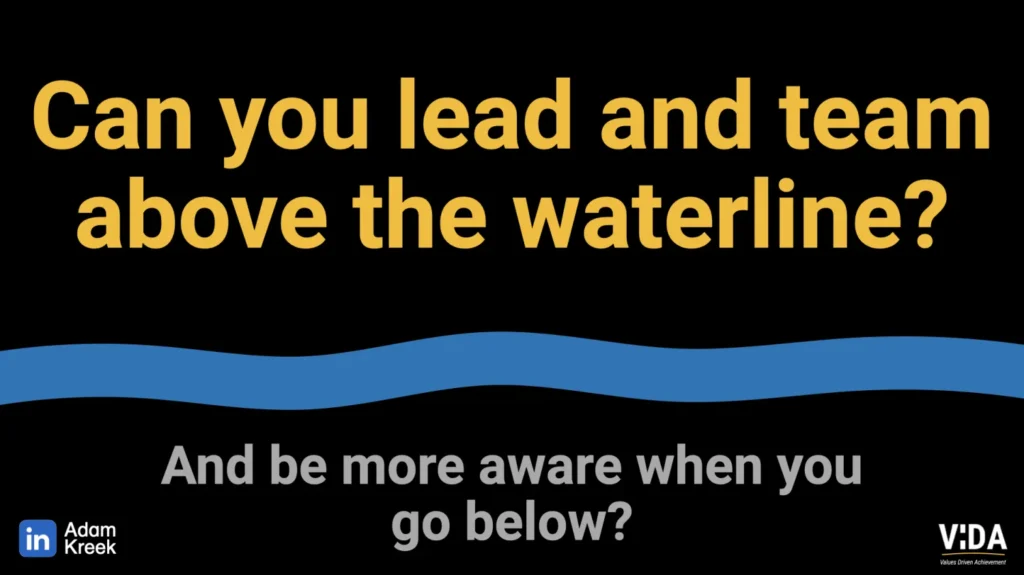
Below the waterline, we often move into protection. We absorb. We justify. We appease. We over-explain. We tell ourselves, “It’s not worth it.” Or we swing the other way and come back too sharp.
Neither response creates clean leadership.
Above the waterline, the goal is not to become fearless. The goal is to become useful. You breathe. You locate yourself. You choose your response instead of being dragged into reaction.
That is where assertiveness lives.
Assertiveness is not aggression. Aggression says, “I matter and you don’t.” Passivity says, “You matter and I don’t.” Assertiveness says, “We both matter, and this needs to be handled directly.”
I wrote about this in How to Work for a High-Dominance Boss When You’re Not Built the Same Way. Some leaders move fast, challenge hard, and communicate with force. That does not mean you need to become a counterfeit version of them. It means you need to prepare clearer language so you can hold your ground without escalating the fight.
I also explored this in How to be more or Less Disagreeable for Success. Highly agreeable people often preserve relationships beautifully. But when that strength is overused, it becomes self-abandonment. Sometimes the most values-driven thing you can do is disagree cleanly.
Why a script helps
Some people are naturally quick in conflict. They can think, speak, and adjust in real time.
Others need time to process. They see nuance. They want to be fair. They do not want to overreact. They are careful with words because words matter.
That is a strength.
But in an ambush moment, that strength can turn into silence.
This is why a pre-built script matters. You are not scripting because you are fake. You are scripting because you want your best self to be available when your nervous system is under load.
A good assertiveness script has four moves:
1. Name the behaviour
Keep this observable.
Not:
“You were disrespectful.”
Try:
“When I receive several sharp messages in response to a simple clarification…”
Or:
“When I’m corrected in front of others in that tone…”
You are not diagnosing the person. You are naming the behaviour.
2. State the impact
Keep this personal and clean.
Not:
“You made me feel attacked.”
Try:
“I find it hard to stay focused on the work when the tone escalates like that.”
Or:
“I find that approach shuts down the clarity we’re both trying to create.”
This keeps you above the waterline. You are not blaming. You are reporting impact.
3. Acknowledge your part
This is not grovelling. This is ownership.
Try:
“I may not have framed my question clearly.”
Or:
“I understand there may have been urgency I wasn’t seeing.”
Or:
“If I missed context, I’m open to understanding it.”
This is grace. It keeps the door open.
4. Make a clear ask
This is grit. It sets the standard.
Try:
“What I’d ask going forward is that we handle clarification directly and respectfully, even when the pressure is high.”
Or:
“Next time, I’d like us to address the issue without escalating the tone.”
Or:
“If something I send creates concern, I’m happy to discuss it. I just need the conversation to stay constructive.”
That is the balance: grit and grace.
Grit brings the standard.
Grace preserves the relationship.
You need both.
A simple script you can use
Here is the basic structure:
“When [specific behaviour] happens, I find it [specific impact]. I acknowledge [your part]. What I’d ask going forward is [specific request].”
Here is a full version:
“When I receive several sharp messages in response to a simple clarification, I find it hard to stay focused on solving the actual issue. I acknowledge I may not have framed my question clearly. What I’d ask going forward is that if something I send creates concern, we address it directly and respectfully so we can keep the work moving.”
That is not dramatic.
That is not soft.
That is not a status fight.
It is clean, adult leadership. And a cousin to Marshall Goldenberg's work in Non-Violent Communication.
If the person is very powerful
With a high-dominance boss or power player, shorter is usually better.
Try this:
“I want to stay focused on solving this. I’m open to feedback, and I also need the conversation to stay respectful.”
Or:
“I hear the concern. I’m happy to address it. I don’t think we need to escalate the tone to solve the issue.”
Or:
“I may have missed something. Help me understand the concern, and let’s keep this constructive.”
These lines work because they do three things at once:
They acknowledge the issue.
They refuse the disrespect.
They redirect to the work.
That is assertiveness.
Do not make it a courtroom speech
When people have been absorbing poor treatment for a long time, they often want the perfect speech.
They want to explain the history. They want to prove the pattern. They want the other person to finally understand.
Be careful.
A long speech often creates more risk, not less. Especially with a forceful person. They may start arguing with details, defending intentions, or turning the conversation into a debate about your tone.
Your first goal is not to prosecute the past.
Your first goal is to interrupt the pattern.
One clean sentence can change the room.
The deeper move: stop Tiptoeing Around
The goal is not to win a fight with a difficult person.
The goal is to recover agency.
When you can say, calmly, “This is not how I want us to work together,” something changes inside you.
You are no longer merely subjected to the moment.
You are participating in it.
That does not guarantee the other person responds well. Some people will respect the boundary. Some will test it. Some will reveal that the environment is not healthy enough for honest work.
That is useful data.
But your job is to stay above the waterline. Not passive. Not aggressive. Clear.
Assertiveness is how kind people stop abandoning themselves.
It is how thoughtful leaders bring their full value into the room.
And it is how we do hard things without becoming hard.
–––––
Adam Kreek and his team are on a mission to positively impact organizational cultures and leaders who make things happen.
He authored the bestselling business book, The Responsibility Ethic: 12 Strategies Exceptional People Use to Do the Work and Make Success Happen.
Want to increase your leadership achievement? Learn more about Kreek’s coaching here.
Want to book a keynote that leaves a lasting impact? Learn more about Kreek’s live event service here.