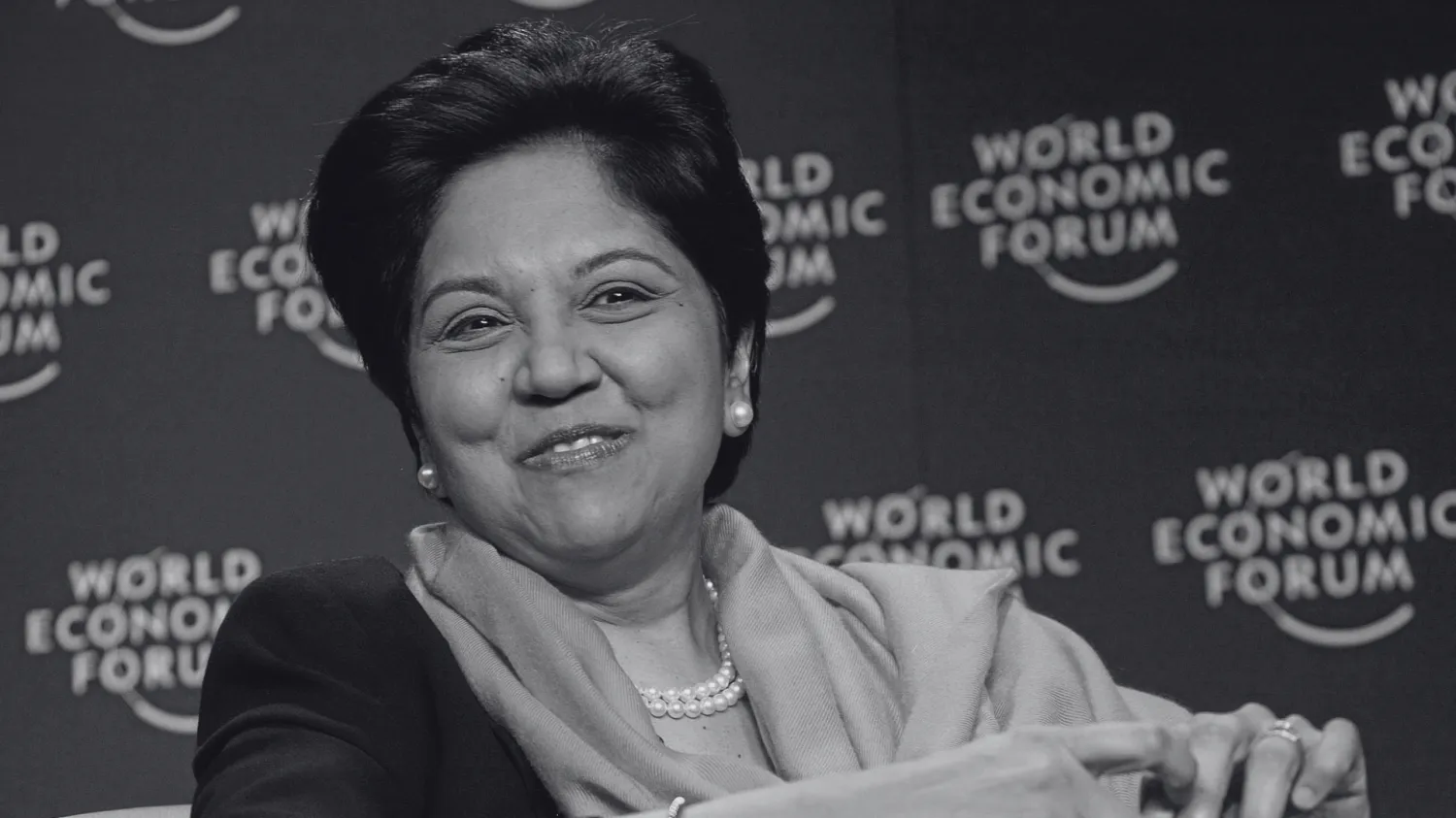
"Be realistic, but don’t project doom and gloom."
Indra Nooyi
Former Chair and CEO of Pepsico
- Date
How to Work for a High-Dominance Boss When You’re Not Built the Same Way
posted in Built For Hard

Adam Kreek
At some point in your career, you will work for a leader who comes in hot.
They move fast. They decide fast. They change direction fast. They challenge ideas in real time. They can be energizing, visionary, commercially sharp, and, on the wrong day, about as relaxing as a leaf blower in a library.
If you are more precise, measured, thoughtful, and internally processed by nature, this can feel like you are living at the end of a whip. Small movement up top. Big crack down below.
This post is for the leader who is not naturally wired like that, but still needs to communicate effectively, manage up well, and hold their ground without turning into a counterfeit version of someone else.
You do not need to become louder, sharper, more performative, or more chaotic to succeed with a highly dominant, highly driven, flexible, extraverted boss.
You do need to become easier for them to trust, quicker for them to understand, and clearer in how you bring value.
That is the game.
First, let’s stop calling one style “good” and the other “bad”
In a lot of organizations, the high-drive, high-dominance leader becomes the default picture of what “real leadership” looks like.
That is lazy thinking.
Fast, forceful, risk-tolerant leaders are often useful in growth, sales, turnarounds, and moments that need courage and momentum. They can create motion where others create meetings.
But measured, analytical, lower-drama leaders bring something just as valuable: judgment, sequencing, quality control, risk awareness, stability, and the ability to build systems that still work after the adrenaline wears off.
A healthy business needs both.
If everyone is high-octane and forceful, you get noise, whiplash, people problems, and expensive rework.
If everyone is cautious and slow-moving, you get delay, drift, and timid execution.
The point is not, “How do I become more like them?”
The point is, “How do I communicate in a way they can actually hear, while staying aligned with who I am?”
That is what we enable at values-driven achievement. Not cosplay. Not compliance. Not rebellion for sport.
If you want a deeper foundation on how values shape behaviour, start here:
The real tension: you may be accurate, but hard for them to process
This is where a lot of thoughtful leaders get into trouble.
They are often right.
They see dependencies.
They notice risk.
They understand second-order consequences.
They care about doing the work properly.
But when they communicate upward, they often do it in a way a dominant boss experiences as:
- too slow,
- too detailed,
- too cautious,
- too open-ended,
- too academic,
- or too emotionally indirect.
That does not mean the precise leader is wrong.
It means the message is not landing.
A highly dominant leader often wants:
- the answer first,
- the recommendation second,
- the tradeoffs third,
- and the ask last.
They are often deciding while you are still framing the problem.
That mismatch creates unnecessary friction.
The mistake most thoughtful leaders make
They assume the quality of their thinking should be enough.
It rarely is.
Good work does matter. Clear thinking matters. Precision matters.
But in relationships with forceful bosses, translation matters just as much.
You may be bringing gold to the table, but if you serve it in twelve layers of caveat, context, and throat-clearing, a high-drive boss may hear only one thing:
“This person is slowing me down.”
Unfair? Sometimes.
Useful to know? Absolutely.
A better frame: translate precision into speed
If you are introverted, deliberate, exact, and not naturally high-dominance, your job is not to abandon your strengths.
Your job is to package them. This takes time and effort to write and think in advance of conversations so you can develop this skill.
Try this structure:
1. Lead with the bottom line
Instead of:
“I’ve been thinking about the implications of the current KPI setup and there are a few considerations that might be worth exploring...”
Try:
Bottom line: I think this metric is distorting behaviour and costing us cross-functional value.
That gets their attention.
2. Give two or three options
High-dominance leaders like movement and choice. They usually do not enjoy being handed a fog bank.
Try:
“We have three paths here:
- fast and messy,
- slower but safer,
- or a middle route.
I recommend the middle route for these reasons.”
3. Name the tradeoff clearly
Thoughtful leaders often imply the tradeoff instead of stating it.
Do not imply. State.
“This saves time now, but increases rework later.”
Or:
“This gives us short-term sales clarity, but it may create silos between teams.”
4. End with the decision you need
Do not leave the conversation hanging in a tasteful cloud of mutual reflection.
Try:
“What I need from you is approval to move forward with Option B.”
That is clean. That is useful. That is easier to follow.
Use language that fits their world, not just yours
One of the most practical shifts you can make with a forceful leader is this:
Stop making your argument in the language of personal comfort, and start making it in the language of business consequences.
That means translating your observations into:
- cost,
- time,
- risk,
- throughput,
- margin,
- customer impact,
- enterprise value,
- role clarity,
- or execution quality.
For example, instead of saying:
“This approach feels chaotic.”
Try:
“This approach creates rework, confuses ownership, and increases the odds that we miss the handoff.”
Instead of saying:
“These KPIs are frustrating.”
Try:
“These KPIs may be driving local optimization at the expense of total enterprise value.”
That is a different conversation.
This is similar to a principle I explore in How to Put Values to Work in Your Organization: values are not useful when they stay abstract. They need to be operationalized into behaviours, decisions, and systems.
Same with insight.
Insight that never gets translated into business language stays trapped in your head.
Understand the pressure above them
Many dominant, highly driven leaders are not simply “intense people.”
They are often carrying pressure from above:
- investors,
- boards,
- lenders,
- parent companies,
- thin margins,
- growth expectations,
- turnaround targets,
- or the permanent modern disease of “do more with less.”
That does not excuse poor behaviour.
But it does explain why some leaders become hyper-fixated on metrics, speed, visibility, and control.
If you want to manage up effectively, it helps to ask:
- What pressure is this person under?
- What are they afraid of missing?
- What are they being measured on?
- What makes them feel in control?
- What makes them feel blindsided?
When you understand that, your communication improves.
You do not have to agree with all of it. You do need to understand the weather system you are standing in.
Never surprise them on something important
This one is simple and incredibly useful.
Dominant, fast-moving bosses often tolerate bad news far better than delayed news.
They do not like surprises.
If there is risk, say so early.
If a timeline is slipping, say so early.
If there is cross-functional confusion, say so early.
If a person issue is beginning to affect delivery, say so early.
Not dramatically. Not emotionally. Not in essay form.
Just early.
A concise update like this goes a long way:
“Quick heads-up. We are still on track overall, but there is one risk I want on your radar: vendor delay may push implementation by a week unless we choose one of these two workarounds.”
That kind of message builds trust.
Silence, followed by last-minute complexity, does not.
Do not publicly turn it into a status fight
This is one of the biggest errors smart, frustrated leaders make with dominant bosses.
They wait.
They stew.
They get irritated.
Then they challenge the boss publicly in a meeting.
This usually goes poorly.
Not because your point is wrong.
Because public correction can feel like a status contest to someone who is highly dominant and highly extraverted. They may respond to the threat rather than the logic.
A better play:
- pre-wire dissent privately,
- challenge the assumption without challenging the person,
- frame your input as risk management, not ego combat.
Try this:
“I think the direction makes sense. I also see one execution risk that could cost us later. Can I walk you through it?”
That lands far better than:
“I don’t think that’s right.”
One keeps the conversation open. The other often invites a fight.
Be assertive without becoming abrasive
A lot of conscientious, kind, values-driven leaders overcorrect.
They are so worried about becoming harsh, pushy, or domineering that they go passive instead.
That passivity gets expensive.
You stay quiet when you should speak.
You absorb work that should be shared.
You tolerate ambiguity too long.
You leave meetings frustrated and replay the conversation in the shower like a courtroom drama no one asked for.
The goal is not aggression.
The goal is calm assertiveness.
That sounds like:
- “Here’s what I’m seeing.”
- “I may be missing something, but this looks like a risk.”
- “Can you help me understand how you want me to handle situations like this?”
- “I think we need clearer role ownership here.”
- “I’m comfortable carrying this piece, but not all of it.”
- “I see the short-term gain. I also see the long-term cost.”
That is not soft.
That is not weak.
That is leadership.
If this is an area you want to strengthen, this post may help:
Stop “quietly helping” when the real issue is standards
Here is a pattern I see often.
A thoughtful leader is in a workshop, meeting, project handoff, or planning process with someone who is under-engaged, unprepared, checked out, or doing half the job.
The thoughtful leader compensates.
They fill the gap.
They carry the load.
They avoid conflict.
Then later they feel irritated, invisible, and slightly noble.
This is not always kindness. Sometimes it is avoidance wearing a cardigan.
Leadership, especially in senior roles, includes holding standards even when you do not have formal authority over the other person.
You do not need to become a hall monitor with a badge and a whistle.
You do need to be willing to say something like:
“Hey, I know you’ve got a lot going on, but we’re both here to engage in this. Can we focus on it together for the next hour?”
That is fair.
That is adult.
That is not rude.
Quiet resentment is not more virtuous than direct communication. It is just quieter.
Clarify your mandate instead of guessing it
Another common trap for more precise, modest leaders: they wait for perfect clarity before acting.
They wonder:
- Am I allowed to step in here?
- Is this overstepping?
- Should I challenge that?
- Is this my lane?
- Am I supposed to lead beyond my title, or stay in my box?
Meanwhile, the organization suffers and you end up annoyed with yourself for staying passive.
Ask earlier.
Try this with your boss:
“In cross-functional situations where ownership is fuzzy and execution is suffering, do you want me to step in and address it directly, even if those people do not report to me?”
That question does several useful things:
- it clarifies expectations,
- it gives you permission to lead more boldly,
- and it gives you a future reference point.
A lot of managing up gets easier when you stop trying to read tea leaves and start asking direct questions.
Track your passive moments, not just your blow-ups
Most conscientious leaders remember the moments where they were too sharp.
They do not remember all the moments where they were too quiet.
That is a problem.
Passive moments often cost:
- speed,
- clarity,
- respect,
- role definition,
- execution quality,
- and self-trust.
After a key meeting, ask yourself three quick questions:
Where did I want to speak up but didn’t?
What did that silence cost?
What would a 10% braver version of me have said?
That last question matters.
Do not aim for a personality transplant.
Aim for 10% braver.
That is usually enough to change the outcome without violating your wiring.
You do not need to become “Type A” to be powerful
Let me say this plainly.
Some of the strongest leaders in the room are not the loudest, fastest, or most forceful.
They are the ones who:
- think clearly,
- speak with intent,
- hold standards,
- understand tradeoffs,
- and bring grounded courage when the room gets noisy.
You may never be the pace-setting, chest-forward, high-dominance operator.
Fine.
The world has plenty of those already.
What many organizations need is someone who can bring:
- clear judgment without panic,
- structure without rigidity,
- directness without ego,
- and steadiness without passivity.
That is a powerful combination.
It just needs to be expressed in a way other people can hear.
A practical playbook for working with a dominant, driven boss
Here is the condensed version.
Do this
- Lead with the answer.
- Bring options, not open loops.
- Translate your concerns into business consequences.
- Flag risks early.
- Challenge privately when possible.
- Ask for mandate clarity.
- Hold standards calmly.
- Use short, direct, low-drama language.
- Reflect on where passivity is costing you.
Avoid this
- Long preambles.
- Hidden asks.
- Public status battles.
- Passive resentment.
- Quietly cleaning up everyone else’s mess.
- Waiting to “feel like a leader” before acting like one.
- Assuming your work will speak for itself.
Your work matters.
Your communication decides whether it gets traction.
Final thought
The deeper challenge here is not just communication. It is identity.
A lot of measured, intelligent, internally processed leaders still feel like “just a guy” or “just a technical person” or “just someone doing good work.”
Meanwhile, everyone around them is already treating them like a leader.
The lag is internal.
Confidence usually does not arrive first.
Action does.
You speak a little more clearly.
You ask one more direct question.
You state one uncomfortable truth without drama.
You challenge one poor assumption earlier.
You stop carrying work that is not yours.
You become a little more pillar-like in the moments that count.
Then, over time, your identity catches up with your behaviour.
That is how this works.
Not by becoming someone else.
By becoming more articulate, more courageous, and more aligned as yourself.
Related reading on ViDA
If this topic hits home, these pieces will help deepen the work:
- How to be more (or Less) Disagreeable for Success
- How to Lead with Grit and Grace — The Motivation Sweet Spot
- How to Put Values to Work in Your Organization
- Get It, Want It, Capacity: A Simple Tool for Smarter Talent Decisions
- What Are Values?
- A Comprehensive Guide to Living in Alignment with Your Core Values
–––––
Adam Kreek and his team are on a mission to positively impact organizational cultures and leaders who make things happen.
He authored the bestselling business book, The Responsibility Ethic: 12 Strategies Exceptional People Use to Do the Work and Make Success Happen.
Want to increase your leadership achievement? Learn more about Kreek’s coaching here.
Want to book a keynote that leaves a lasting impact? Learn more about Kreek’s live event service here.