
"How do you leak pressure? Whats the difference between leadership and stewardship?"
Adam Kreek
Founder Built for Hard
- Date
From Leadership to Stewardship: How to Carry Pressure Without Leaking It
posted in Built For Hard

Adam Kreek
Leadership is not just about vision, strategy, execution, or influence.
Leadership is also about pressure.
Pressure moves through people. It moves through conversations, decisions, nervous systems, cultures, homes, teams, and organizations. The question is not whether leaders carry pressure. They do.
The question is where that pressure goes.
Some leaders leak it.
It leaks as control. Avoidance. Emotional dumping. Cynicism. People-pleasing. Burnout. Confusion. Reactivity. Overwork. Withdrawal. Unclear boundaries. Hardness.
Other leaders seem to metabolize pressure differently. They still feel it. They still carry it. But instead of unconsciously transmitting it downstream, they process it, interpret it, and respond with steadier judgment and more humane performance.
That is the territory I have been exploring through a working model I currently call Leadership Containment Theory.
This is not a finished theory. It is an evolving framework emerging from years of executive coaching, keynote work, leadership facilitation, organizational observation, athletics, ocean rowing, and my own lived experience under pressure. Some of the ideas connect to earlier writing on pressure, responsibility, and leadership from the “backstage” rather than just the visible front-stage performance. You can see traces of that thinking in posts like Above the Waterline Leadership: Move From Drama to Responsibility and across the broader Values Driven Achievement blog.
What is becoming clearer to me is this:
Good leaders do not just create results.
Good leaders contain pressure well enough that unnecessary harm does not spread carelessly through the system.
What Is Leadership Containment Theory?
At its simplest:
Leadership Containment Theory is a model for understanding how pressure moves through a leader and into the systems they influence.
And:
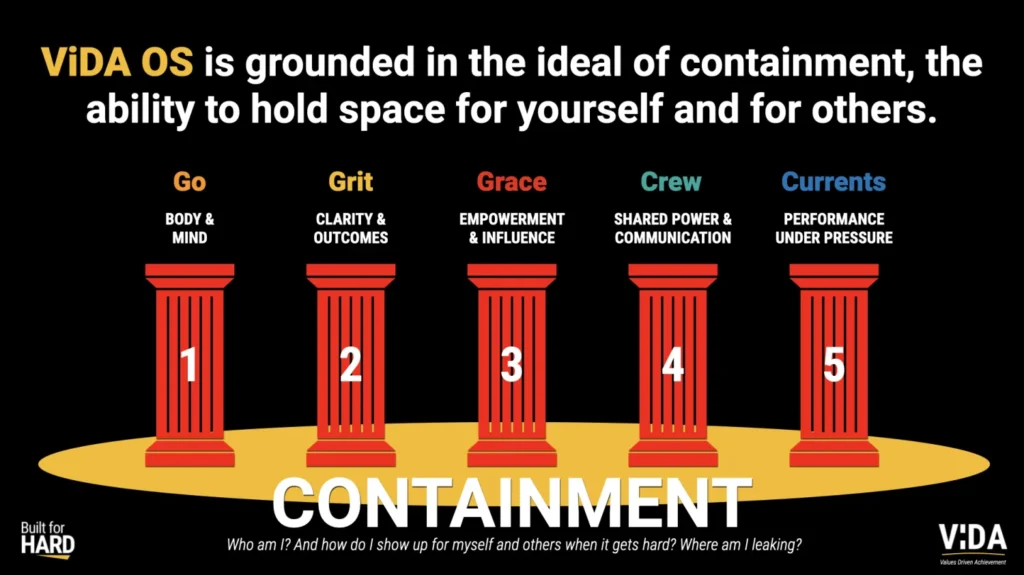
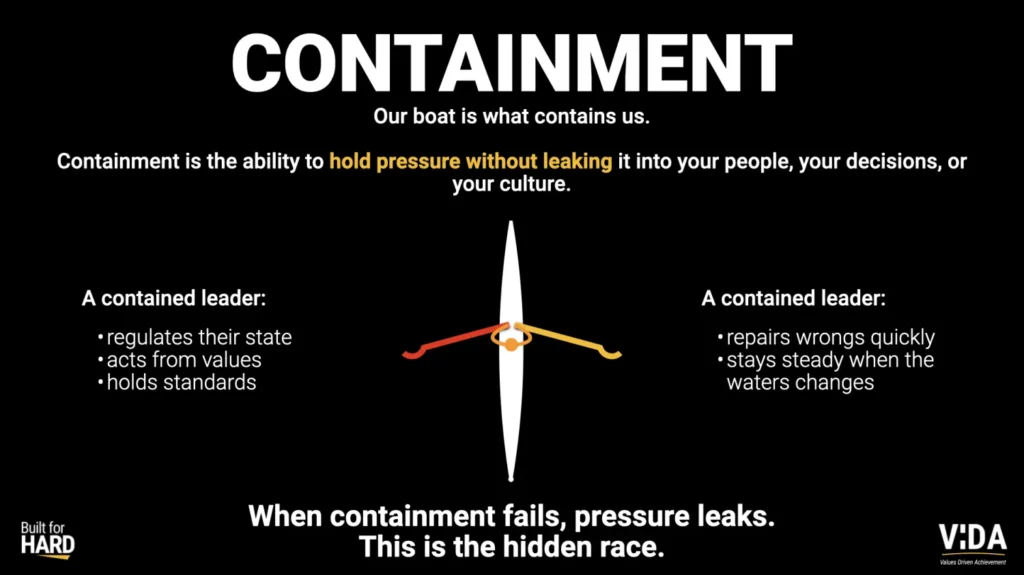
Leadership Containment is the trained capacity to hold pressure without leaking it into your people, your decisions, or your culture.
Containment is not suppression.
It is not pretending.
It is not emotional numbness.
It is not becoming robotic, polished, or fake.
Containment is the disciplined ability to understand the pressure you are carrying and choose how it moves through you.
A contained leader can still be emotional.
Still intense.
Still competitive.
Still ambitious.
Still human.
But they do not unconsciously dump every internal state into the room.
They process enough backstage so they can lead more clearly front-stage.
The Authenticity Trap
One of the problems I increasingly see in modern leadership development is what I would call the authenticity trap.
We tell leaders to “bring their whole selves to work,” but we rarely teach them how to choose which part of themselves belongs in which room.
Under pressure, authenticity without containment can become leakage.
A leader may call it honesty, vulnerability, passion, or transparency, while the team experiences instability, confusion, emotional dumping, inconsistency, or fear.
Leadership Containment Theory is not anti-authenticity.
It is pro-integration.
The goal is not to suppress parts of yourself. The goal is to recognize which part of you is leading right now and whether that part is useful for the responsibility in front of you.
A contained leader asks:
- Which part of me is leading right now?
- What pressure am I carrying into this room?
- What meaning am I attaching to this moment?
- What does this relationship actually need from me?
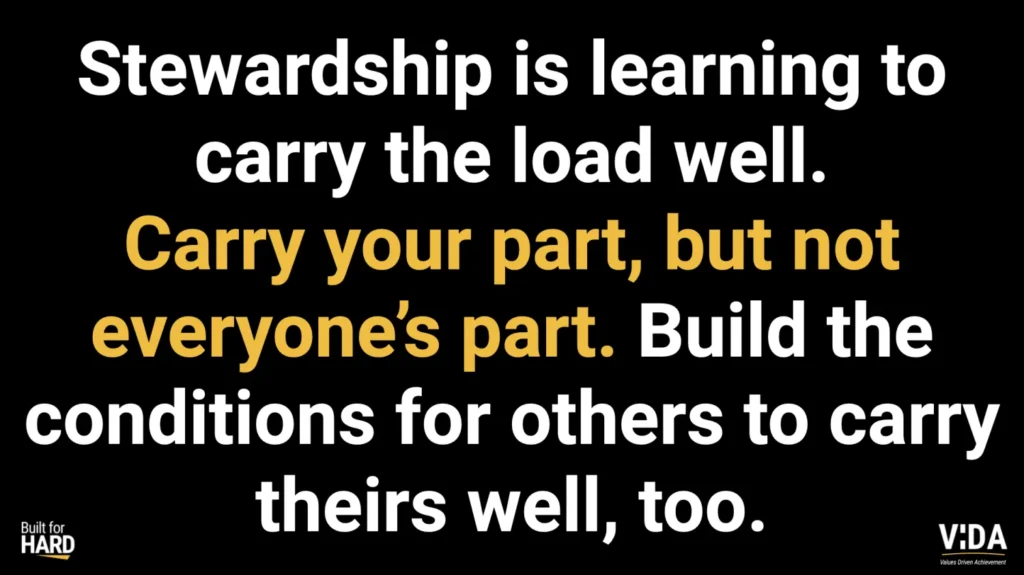
Those are stewardship questions.
Leadership Leakage
One of the central diagnostic questions in this model is simple:
Where am I leaking?
Pressure often leaks as:
- over-control
- avoidance
- people-pleasing
- resentment
- emotional dumping
- cynicism
- rigidity
- confusion
- burnout
- withdrawal
- blame
- collapse
- chronic over-functioning
The important thing is this:
Most leakage does not come from bad intentions.
It often comes from good people carrying more pressure than they know how to metabolize.
Case Study: When Care Leaks Into Avoidance
One leader I worked with was warm, loyal, and deeply committed to their team.
They cared. That was obvious.
But there was a problem.
One team member was resisting direction, weakening the team dynamic, and creating unnecessary drag inside the organization. The leader knew a difficult conversation was needed. They had known it for months.
But they kept delaying it.
Not because they lacked intelligence.
Not because they lacked values.
Not because they lacked courage.
Because the pressure of the conversation became tangled up with a deeper fear:
What if they stop liking me?
This is one of the most common leadership leaks I see.
Care leaks into avoidance.
Eventually, the leader had the conversation. They later described their body as “vibrating” afterward. Their nervous system had interpreted the interaction as danger.
And then something surprising happened.
A few days later, the employee called back and spoke normally. No explosion. No relationship-ending rupture. No catastrophe.
The relationship survived.
In some ways, it strengthened.
The leader learned something important:
Accountability does not destroy trust when it is delivered with clarity, respect, and steadiness.
Avoidance often damages trust more than honesty does.
What we then built together was not merely conversational courage. We built structure.
Weekly conversations.
Monthly reviews.
Quarterly alignment.
Clear expectations.
Shared accountability.
The pressure stopped sitting solely inside the leader’s nervous system.
The system started holding some of the weight.
That is containment.
Not hardness.
Not domination.
Not emotional suppression.
Containment.
Case Study: When Insight Leaks Into Anxiety
Another leader I coached was technically exceptional.
They could see organizational problems before most people around them. They understood systems deeply and cared about doing things properly.
But under pressure, their insight started leaking sideways.
They would say the important thing once, quietly, then retreat.
They over-functioned.
They carried responsibility that belonged elsewhere.
They became scattered and defensive while trying to protect both the organization and their team.
The breakthrough came when we stopped discussing survival and started discussing stewardship.
Instead of asking:
“How do I hold onto my position?”
The question became:
“What am I actually building here?”
From there, we built a factual, measurable account of the value this leader created inside the organization. Not vague confidence. Not motivational affirmations. Evidence. Clarity. Contribution.
Containment transformed anxiety into steadier influence.
Case Study: When Pressure Leaks as Control
Another leader received feedback that they were too controlling.
The feedback mattered to them because they genuinely cared about their people.
So they pulled back.
And the team became confused.
This is important:
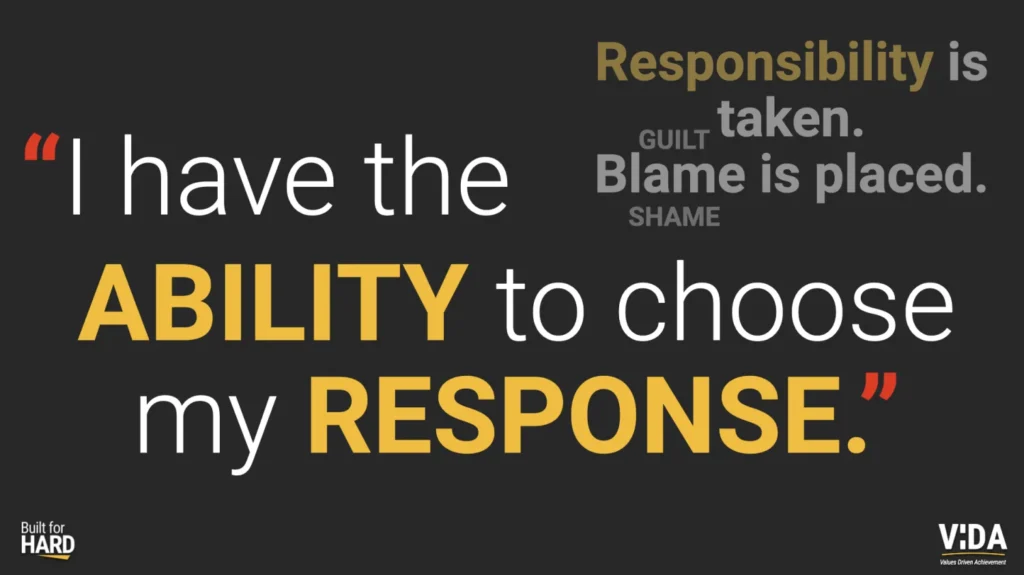
Pressure does not only leak through over-control.
It can also leak through withdrawal.
A leader can become so afraid of appearing controlling that they stop giving the direction, standards, and clarity the team actually needs.
The real work was not becoming “less controlling.”
The real work was becoming more conscious.
More calibrated.
More intentional.
More aware of when pressure was driving behavior instead of stewardship.
The practical shift was surprisingly simple: map the process visibly with the team so the standards no longer lived only inside the leader’s head.
When the process became shared, the leader no longer needed to transmit urgency through tone, pressure, or intensity.
The system itself began holding some of the weight.
Containment Is the Hull
One of the primary metaphors in this evolving model comes from rowing and boats.
Containment is the hull.
If the hull leaks, everything else gets harder.
You can have strong athletes, powerful oars, ambitious goals, and excellent strategy, but if the hull is taking on water, the whole system becomes heavier than it needs to be.
Leadership works similarly.
You can have talent, intelligence, values, and ambition, but if pressure is leaking everywhere, performance becomes unnecessarily expensive.
Containment is not the entire leadership system.
But it may be the foundation underneath it.
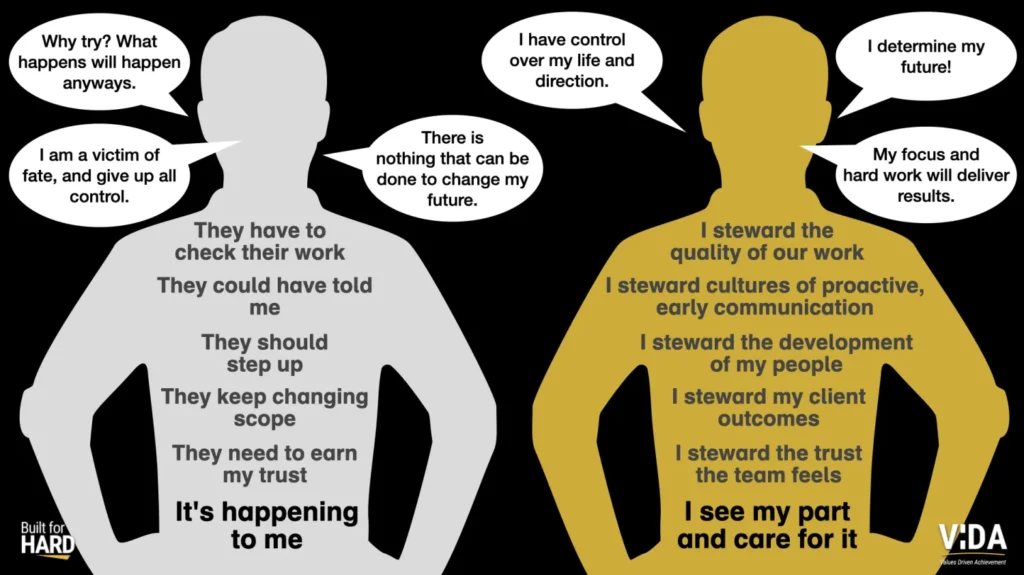
From Leadership to Stewardship
The deeper this model evolves, the more I suspect the real destination is not leadership.
It is stewardship.
Leadership often asks:
What can I build, drive, control, or influence?
Stewardship asks:
What has been entrusted to me, and how do I carry it well? And share the load better?
The steward is not passive.
The steward can push hard.
Set standards.
Confront problems.
Build systems.
Drive performance.
Compete.
Decide.
Lead change.
But the steward understands that success is not permission to pass unnecessary harm downstream.
This may ultimately become the central claim behind Leadership Containment Theory:
The world does not need more leaders who simply want influence.
It needs more stewards.
People strong enough to do hard things.
And contained enough to stay human while they do them.
–––––
Adam Kreek and his team are on a mission to positively impact organizational cultures and leaders who make things happen.
He authored the bestselling business book, The Responsibility Ethic: 12 Strategies Exceptional People Use to Do the Work and Make Success Happen.
Want to increase your leadership achievement? Learn more about Kreek’s coaching here.
Want to book a keynote that leaves a lasting impact? Learn more about Kreek’s live event service here.