
"You do not create core values. You discover them."
Jim Collins
Author. Researcher. Entrepreneur.
- Date
Aspirational Values Are Not Core Values. That’s Why They Matter.
posted in Leadership

Adam Kreek
I once worked with a Canadian nuclear-sector organization that wanted to become more innovative.
This made sense.
The world was shifting. Energy demand was rising. AI was putting new pressure on power grids. Small modular reactors were moving from policy conversation into serious strategic possibility. The organization needed to evolve.
The leader saw this clearly. He wanted more speed, more creativity, more intelligent risk-taking.
Also reasonable.
But there was one small detail.
It was nuclear.
And in nuclear, “move fast and break things” is not a strategy. It is a headline no one wants to read over breakfast.
Nobody wants a nuclear safety organization whose unofficial motto is, “We’ll figure it out in beta.”
This is where values work becomes real.
The answer was not, “You are a nuclear organization, therefore you cannot innovate.”
That would be lazy.

The answer was also not, “Innovation is now our core value, everyone get a hoodie and start disrupting things.”
That would be dangerous.
The answer was this: because the organization’s true core values were safety, security, diligence, stewardship, precision, and public trust, any innovation agenda had to serve those values first.
Innovation could not replace the core.
Innovation had to earn permission from the core.
That is the difference between aspirational values that help and aspirational values that wreck trust.
Values Are Evidence, Not Wishes
Jim Collins makes a clean argument: you do not create core values. You discover them.
Core values are not the values you wish you had. They are the values already embedded in the organization’s behaviour, decisions, rituals, trade-offs, and stories. They are what people protect when pressure rises.
Patrick Lencioni makes the same distinction in a different way. He separates values into categories: core values, aspirational values, permission-to-play values, and accidental values.
That distinction is not academic housekeeping. It matters.
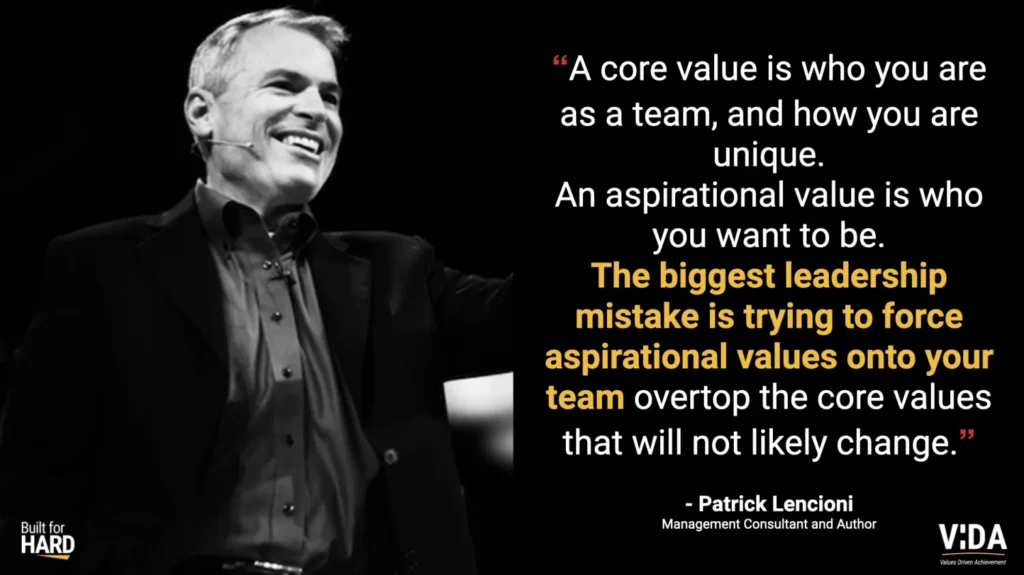
A core value is already true.
An aspirational value is something you want to become.
A permission-to-play value is basic adult behaviour. Things like honesty, respect, and not stealing the stapler.
An accidental value is something the culture picked up along the way. Sometimes helpful. Sometimes weird. Sometimes “we only promote people who enjoy spreadsheets, silence, and suffering.”
The leadership mistake is pretending aspirational values are core values.
That is how organizations become cynical.
A company says, “We value innovation,” but punishes mistakes.
A company says, “We value work-life balance,” but promotes the person who sends emails at 11:46 p.m. with the subject line “Quick thought.”
A company says, “We value collaboration,” but rewards internal competition and political knife fighting.
People notice.
They always notice.
The Leader’s Personal Values Are Not Always the Organization’s Values
This is where leadership gets more subtle.
Many strong leaders are driven, dominant, impatient, strategic, and full of ideas that will never be implemented quickly enough or well enough.
That frustration is often useful. It creates movement. It challenges stale systems. It pushes people out of complacency.
But it must be applied consciously, diligently, and with grace.
Your personal value set is not automatically the organization’s value set.
A founder may value speed. The organization may need stability.
A CEO may value boldness. The organization may have earned trust through caution.
An entrepreneur may value experimentation. The organization may serve people who need consistency, reliability, and zero surprises.
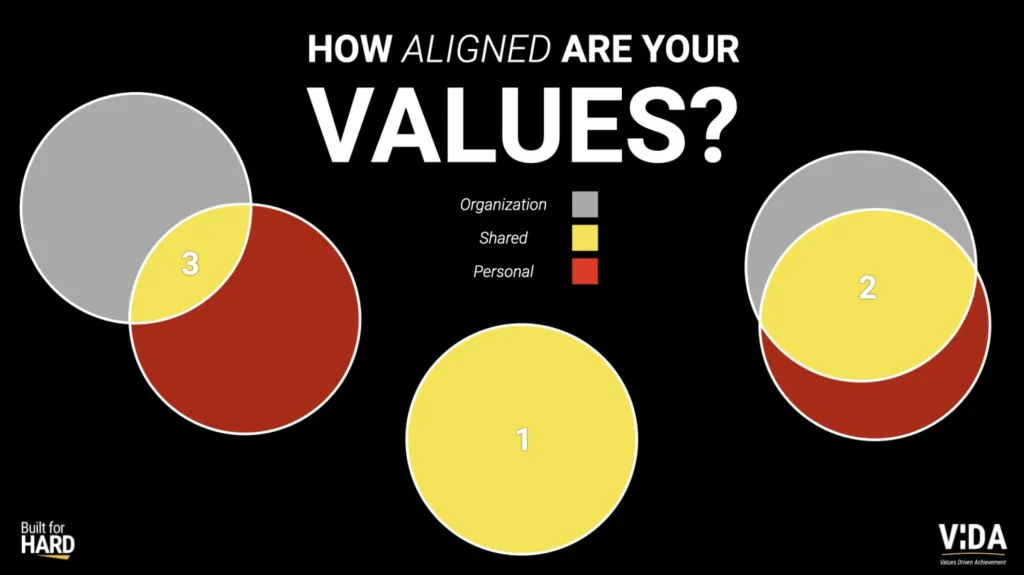
This does not mean the leader is wrong.
It means the leader has to lead.
In Leadership Containment: The Quiet Work of Holding a System Together, I write about the parts of ourselves we bring into leadership. We bring our drive, fear, ambition, impatience, judgment, courage, and wounds. The work is not to amputate those parts. The work is to contain them well enough that they serve the system instead of hijacking it.
The high-drive leader has to ask:
- What part of me is useful here?
- What part of me needs to calm down and have a sandwich?
- What value am I trying to impose because I personally love it?
- What value does this organization already need me to honour before it will trust my change agenda?
That is leadership maturity.
Competing Values Are Not a Bug
It is difficult for a creative marketing company to also be stable, secure, and predictable.
It is difficult for a sales team to be deeply collaborative when individual performance values dominate.
It is difficult for a not-for-profit built around care and inclusion to suddenly drive hard performance accountability.
These tensions are normal.
The Competing Values Framework helps us see the pattern. Organizations often have to balance collaboration, creativity, control, and competition. Every culture leans somewhere. Every strength casts a shadow.
A dynamic, creative, experimental organization may struggle with consistency, process, and follow-through. The leader’s job may be to install enough control that the team does not break itself.
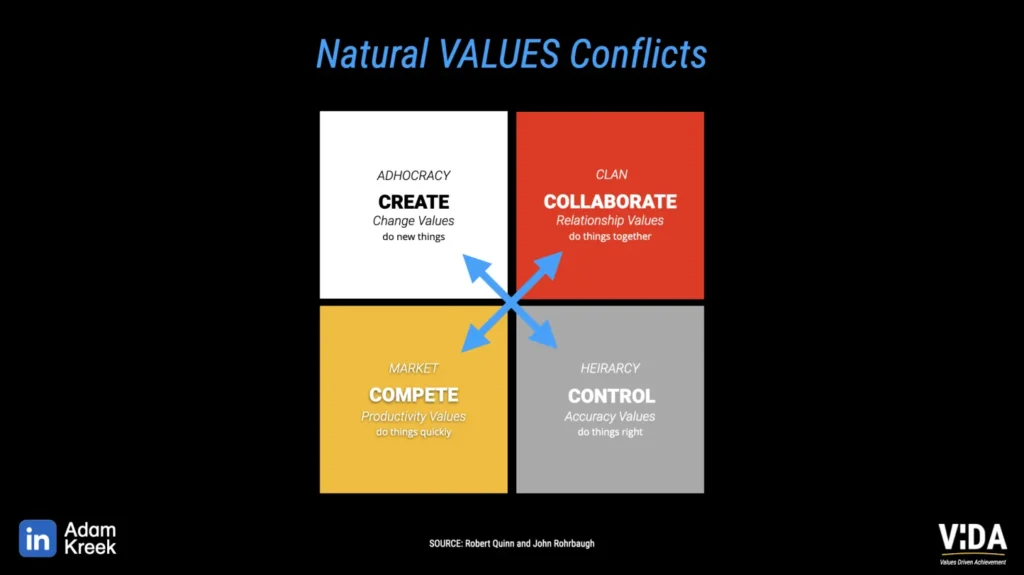
A stable, secure, duty-bound organization may struggle with speed, creativity, and adaptation. The leader’s job may be to introduce change in a way that first honours safety, trust, and diligence.
Neither culture is morally superior.
They are built for different work.
As I explored in Different Models That Classify Values, values often sit in tension with one another. Schwartz’s theory shows that some values naturally pull against others: openness to change versus conservation, self-enhancement versus self-transcendence.
That tension does not disappear because we put a new word on a wall.
Name It to Tame It
So what do we do with aspirational values?
We name them honestly.
We do not pretend they are core.
We do not use them to shame the existing culture.
We do not announce them as if the organization can magically become new by Thursday.
We say:
“This organization has earned trust through safety, diligence, and stewardship. Those values are real. We will not violate them. And because the world is changing, we now need to build more innovation in service of those values.”
That sentence is very different from:
“Our new value is innovation.”
The first sentence respects the system.
The second sentence insults it.
In Conflicting Values and their Shadows, I argue that values conflict is not a failure. It is a leadership condition. The unseen values driving our frustration need to be named before they can be integrated.
Name it to tame it.
If safety is the core value, say so.
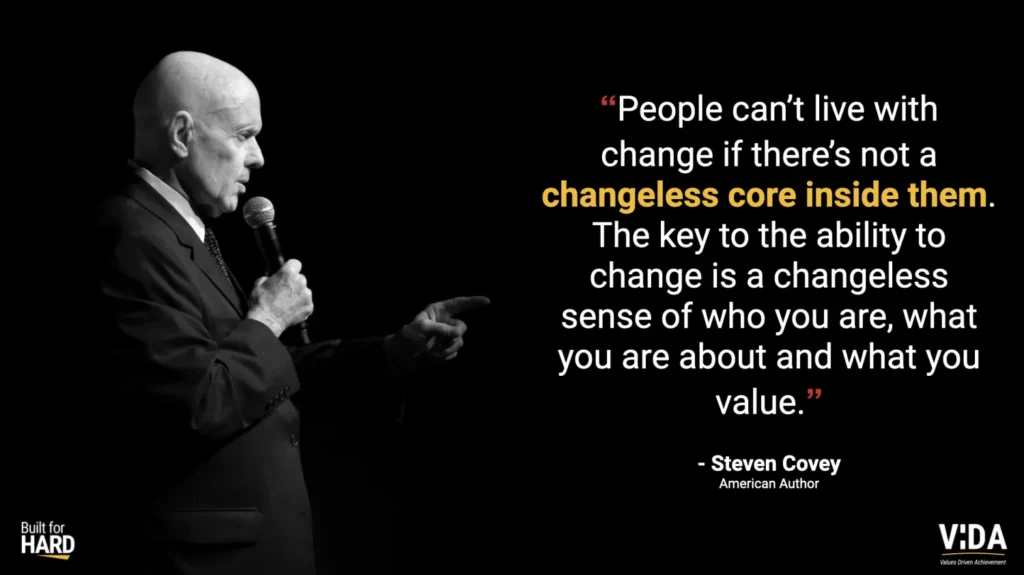
If speed is the aspiration, say so.
If collaboration is the stated value but individual performance is the rewarded value, say so.
If the organization says it wants creativity but secretly worships control, say so.
Not cruelly. Not cynically. Accurately.
Accuracy is kindness in leadership.
Eventually.
Usually after the first awkward meeting.
Aspirational Values Need a Change Path
Aspirational values become useful when leaders convert them into principles, practices, and protections.
If innovation is aspirational inside a safety-first organization, the question becomes:
- How do we innovate safely?
- What experiments are small enough to fail without violating trust?
- What risks are acceptable?
- What risks are sacredly unacceptable?
- What must be communicated repeatedly so people know safety is not being abandoned?
- What proof does the organization need before it moves faster?
That is the work.
And yes, for intelligent, high-drive strategic leaders, this requires a modicum of patience.
A very annoying amount of patience, sometimes.
But it can also be a relief.
You are not failing because the organization will not instantly become creative, fast, and adaptive. You are leading a real system with real commitments. Some organizations are supposed to move slowly. Society needs them to move slowly. We put them in charge of banking, aviation, child protection, water systems, hospitals, bridges, and nuclear safety for a reason.
The crucible of leadership is not simply driving change.
It is driving the right change at the right speed through the actual values of the organization you serve.
The Strong Case
Values cannot be aspirational because core values describe who the organization already is.
Aspirational values describe who the organization needs to become.
Confuse those two, and you breed cynicism.
Separate them, and you create a useful leadership map:
- The conservative organization can change, but it must change through trust.
- The creative organization can stabilize, but it must stabilize without killing creativity.
- The performance culture can become more collaborative, but it must not pretend competition disappeared.
- The care-based organization can become more accountable, but it must not abandon care in the name of efficiency.
Aspirational values are not fake.
They are just not core values... yet.
Treat them honestly, appropriately, and they become a path.
Pretend they are already true, and they become theatre.
And nobody needs more theatre in leadership.
We have enough slide decks.
–––––
Adam Kreek and his team are on a mission to positively impact organizational cultures and leaders who make things happen.
He authored the bestselling business book, The Responsibility Ethic: 12 Strategies Exceptional People Use to Do the Work and Make Success Happen.
Want to increase your leadership achievement? Learn more about Kreek’s coaching here.
Want to book a keynote that leaves a lasting impact? Learn more about Kreek’s live event service here.