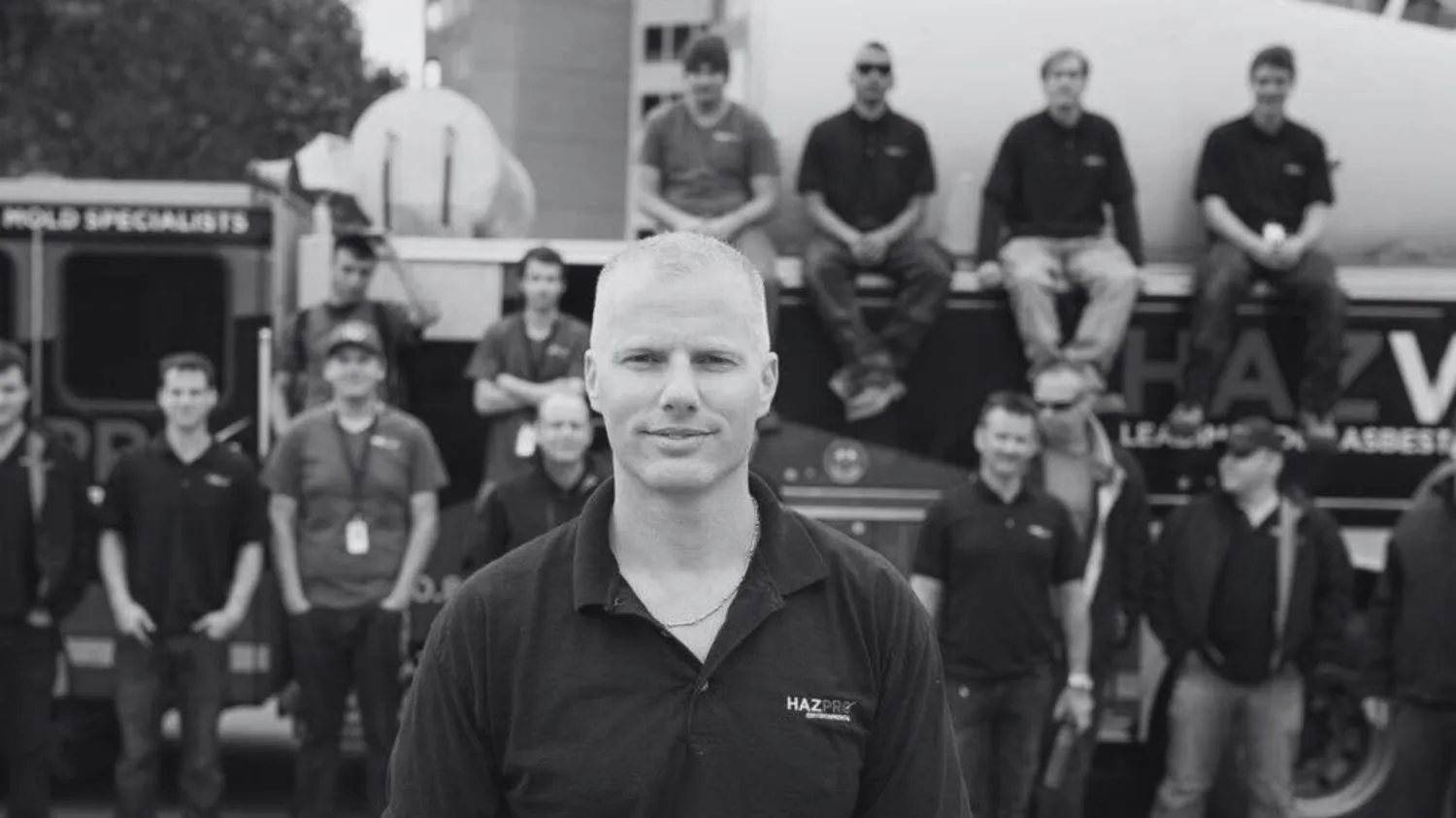
"What pisses you off?"
Curtis Erickson
Founder Hazpro Environmental
- Date
“What Pisses You Off?”: The Kaizen Flywheel Most Teams Are Missing
posted in Business Coaching

Adam Kreek
Most leaders say they want continuous improvement.
Then they build a culture where nobody wants to admit what’s broken.
So the problems go underground. The workarounds become normal. The best people silently carry the load. And the “improvement initiative” turns into another poster on the wall beside the dusty fire extinguisher.
On Vancouver Island, Curtis Erickson (Hazpro Environmental) took a different path: he built a system where the trigger for improvement is brutally human:
“An incident is anything that pisses you off.”
That’s not a gimmick. It’s a Kaizen engine—and it works because it’s not just a conversation. It’s how the information is captured, reviewed, reinforced, and rewarded.
Hazpro Environmental was founded in 2008 by Curtis Erickson and runs specialized crews and equipment throughout Vancouver Island.
The genius of the phrase
Most companies define “incidents” like lawyers. Or safety manuals. Or risk officers with an allergy to plain language.
Curtis defined it like a technician on site at 7:12 a.m. when the tool is missing, the info is wrong, the process is clunky, and the customer is watching.
“Anything that pisses you off” includes:
- Near misses and safety concerns
- Actual accidents
- Missing tools
- Missing information
- Anything frustrating the tech trying to do the job
This matters because Kaizen doesn’t start with a spreadsheet. It starts with attention.
Curtis created a simple mental trigger:
If it annoys you, it’s worth capturing.
The part most leaders miss: capture beats intention
Here’s where Hazpro’s approach levels up.
When something “pisses you off,” the next step isn’t complaining to a buddy and moving on. The next step is capture.
They log it in a Microsoft Form—fast, consistent, and low-friction.
That tiny design choice is everything.
Because “continuous improvement” without capture is just… continuous conversation.
And conversation doesn’t compound. Systems compound.
Kaizen at Hazpro: the weekly rhythm that makes it real
Every week Hazpro runs a safety training meeting, and one agenda item is simple:
They read the incidents out loud.
Not to shame people. Not to hunt for blame. But to normalize the truth:
“We want to see the failures early, so we can get better.”
Curtis was clear about the social contract:
- Incidents get shared.
- People don’t get humiliated.
- The team discusses what happened and what to do next.
- Leaders model “safe” behavior by talking about issues without attacking the person.
This is psychological safety that actually has teeth—because it’s built into the operating cadence, not just talked about in a leadership retreat.
Where it gets even smarter: incident data becomes training fuel
After the meeting, Hazpro doesn’t let the insights evaporate.
They push the incident data into Power BI, so they can filter and review patterns quarterly and seasonally.
That means the training topics are driven by reality:
- Winter? Slips, trips, traction, salt on driveways.
- Summer? Heat exhaustion, hydration, pacing.
This is what good Kaizen looks like in the wild:
the work creates the data, the data shapes the training, the training changes the work.
Customer feedback as Kaizen input (and the reward structure that makes it stick)
Hazpro also gathers customer reviews—every week—and reads them in the same meeting.
They ask customers about the sales process, the crew, what could improve, and a rating out of 10.
And here’s the key: they reward excellence immediately.
If the rating is 10/10, Curtis hands out gift certificates to the crew.
If it’s not 10/10, they still read it out—and they talk about it.
Two important signals get reinforced:
- We don’t hide feedback.
- We celebrate great performance.
That’s reward structure done right: it doesn’t just “pay for results.” It teaches the team what “great” looks like and makes it emotionally safe to look at what isn’t great yet.
The “what happened?” habit: celebrating wins and learning from misses
Curtis shared another move I love. When a job goes unusually well (say they budgeted 10 tech-days and a crew finishes in six) he asks:
“What happened?”
And he asks it with a smile, like:
“Explain yourself. How did you pull that off?”
That’s not just humour. That’s strategy.
Because it hunts for what researchers sometimes call positive deviance: the moments when performance is better than expected, so you can learn what to repeat.
They also do postmortems on jobs that went sideways (with discretion and leadership judgment), and they run deeper job reviews in a separate weekly management meeting—then bring the most useful learning back to the crew.
Again: capture → review → decide → reinforce.
Kaizen isn’t an idea. It’s a loop.
“Celebrate failure” (properly): the constructive relationship with failure
This whole system ties directly to something I’ve been saying for years:
If you want growth, you need a constructive relationship with failure.
In my TEDx Victoria talk, I Seek Failure, I explain the principle a teammate drilled into me: you intentionally push to the edge to find the limit—because that’s where growth happens.
Most teams do the opposite. They avoid failure so aggressively that they avoid learning.
Hazpro’s approach is more mature:
- They don’t glorify failure.
- They don’t punish people for exposing it.
- They treat small failures and frustrations as early warning signals and improvement opportunities.
That’s “happy failure” in business form: fail early, learn fast, improve steadily.
The Kaizen flywheel you can steal this week
If you want this in your business, don’t start with “culture.”
Start with mechanics.
1) Choose a trigger phrase your people will actually use
Hazpro’s is spicy, memorable, and real: “What pisses you off?”
If your environment needs cleaner language, keep the spirit:
“What frustrated you this week?” / “What got in your way?” / “What slowed us down?”
2) Make capture effortless
A form. A QR code. A shared channel with a template.
If logging the issue is harder than tolerating the issue, people will tolerate it.
3) Review it weekly in a consistent forum
Hazpro uses the safety training meeting.
That’s brilliant, because safety is already about honesty, prevention, and shared standards.
4) Turn the discussion into action
Pick one or two fixes. Assign an owner. Decide the next step.
No owner = no improvement.
5) Reinforce it with visible feedback loops
Dashboards help (Power BI, filters, seasonal patterns).
So does a simple “Here’s what we changed because of your report.”
6) Reward the behavior you want repeated
Hazpro rewards 10/10 service with gift certificates.
They also reward excellence with recognition and curiosity (“What happened?”).
Reward structure is culture in disguise.
Your three questions for this week
If you want Kaizen to move from concept to compounding advantage, start where I often start with teams:
- What’s one small improvement we can make this week?
- How will we track it?
- How will we celebrate it?
Then—this is the Hazpro twist—add one more:
What pissed you off… and did we capture it?
Because the magic isn’t the conversation.
The magic is what happens after the conversation—when you turn frustration into data, data into training, training into better work, and better work into pride.
Credit to Curtis Erickson and Hazpro Environmental on Vancouver Island for building a system that makes Kaizen practical, human, and repeatable.
–––––
Adam Kreek and his team are on a mission to positively impact organizational cultures and leaders who make things happen.
Kreek is an Executive Business Coach who lives in Victoria, BC, near Vancouver, British Columbia, Canada. He is an Olympic Gold Medalist, a storied adventurer and a father.
He authored the bestselling business book, The Responsibility Ethic: 12 Strategies Exceptional People Use to Do the Work and Make Success Happen.
Discover our thoughts on Values here.
Want to increase your leadership achievement? Learn more about Kreek’s coaching here.
Want to book a keynote that leaves a lasting impact? Learn more about Kreek’s live event service here.