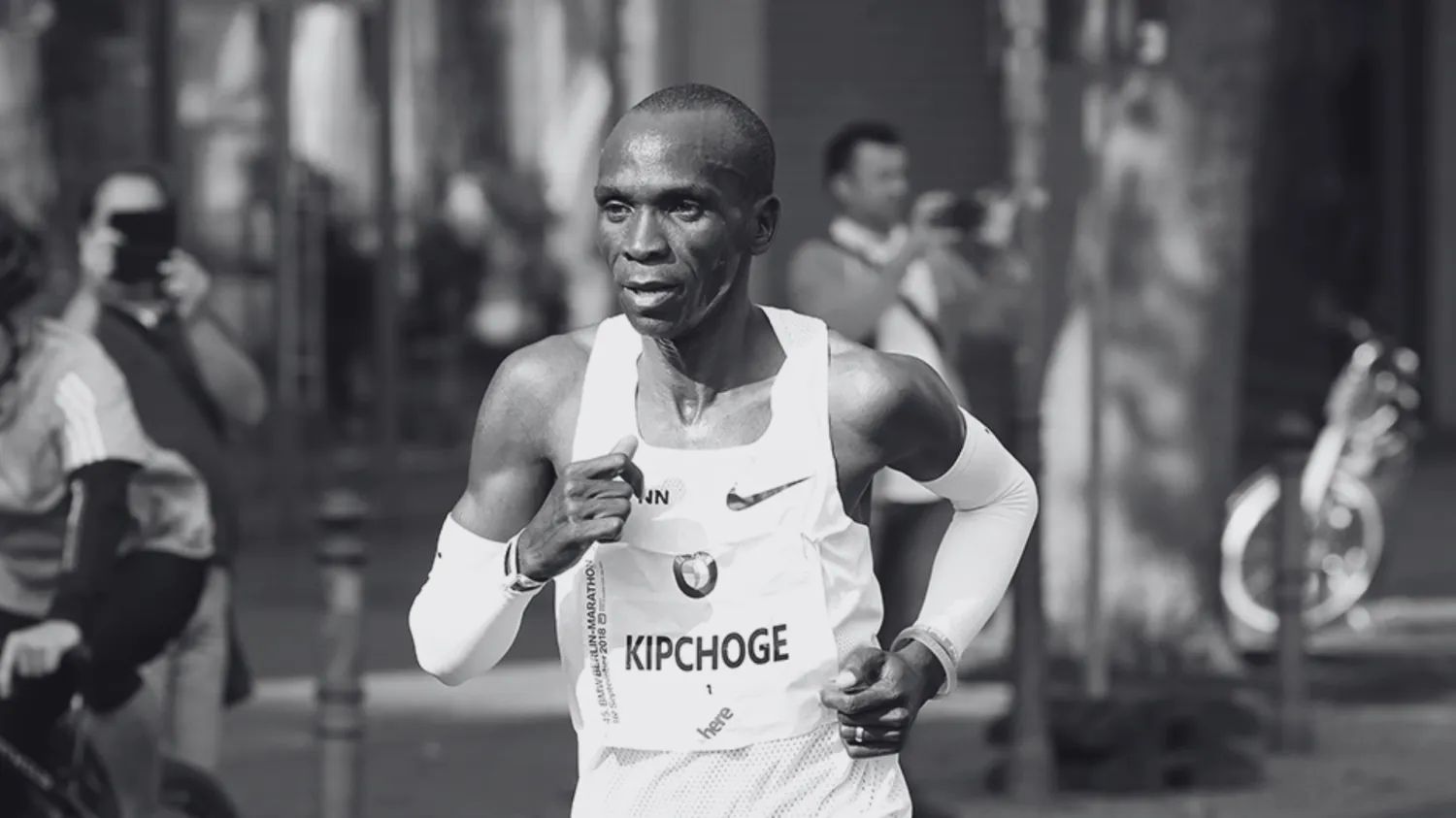
"Only the disciplined ones in life are free. If you are undisciplined, you are a slave to your moods and your passions."
Eliud Kipchoge
Marathon world record holder
- Date
The 11-Minute Rule: The Smallest Exercise Dose a Leader Can Defend (and Actually Do)
posted in Built For Hard

Adam Kreek
There’s a moment in almost every executive or business coaching relationship where exercise shows up like an overdue invoice.
Not because the leader doesn’t know it’s important.
Because the calendar is a hungry animal. Kids get sick. Sleep gets disrupted. Meetings multiply. And suddenly “I’ll work out when life calms down” becomes a long-term strategic plan with no launch date.
Here’s the reframing that I have seen work for high-load leaders:
Exercise isn’t a hobby. It’s an operational requirement.
Like checking email. Like Monday meetings. Like keeping the company solvent.
Not heroic. Not optional. Just part of the job.
And if you’re going to treat it like part of the job, you need a minimum that is:
- grounded in science,
- small enough to be non-negotiable,
- and strong enough to create a real “state change” you can feel.
That’s where the 11-Minute Rule comes in.
The scientifically honest truth: no magic minute, but a clear curve
Let’s start with what a critical scientist will tell you:
There is no single minute threshold where exercise suddenly becomes “optimal.” Biology doesn’t work like a toaster.
But the most credible research across huge populations does show something you can build a leadership rule around:
The dose–response curve is non-linear
The biggest gains happen when you go from zero → some movement. Then benefits keep accumulating, but with diminishing returns as volume rises.
This “steep early, flatter later” curve shows up repeatedly in high-trust publications and guideline bodies:
- Large dose–response meta-analyses in the British Journal of Sports Medicine (Garcia, Brage and colleagues; very large pooled datasets).
- Major pooled cohort work in JAMA Internal Medicine (Arem and colleagues).
- Device-measured evidence see also BMJ work (Ekelund and colleagues), supporting the curvilinear relationship.
Translation: If you’re currently doing nothing, the first step to activit has a disproportionately high value.
The Minimal Viable Exercise Dose (MVED) for leaders
The rule
11 minutes per day of moderate-to-vigorous aerobic activity.
Why 11 minutes?
Because it maps to ~75 minutes/week, which is roughly half the mainstream public-health guideline target of 150 minutes/week of moderate activity (WHO and other major guideline bodies). And importantly: those large dose–response papers show you’re already into meaningful benefit territory well before the full guideline dose.
Scientist’s caveat:
Most mortality outcomes are supported by observational cohort research (for obvious reasons, we don’t randomize millions of humans to decades of inactivity). The point is not a magical switch at 11 minutes. The point is a defensible minimum that reliably moves the needle and actually gets done.
What counts as “11 minutes” (how hard should it feel?)
Forget fancy heart-rate zones. Leaders need something you can run in real life, between calls, without a chest strap and a PhD.
Use the Talk Test, a simple intensity gauge widely used in exercise prescription and public health education:
- Moderate intensity: you can talk, but you can’t sing.
- Vigorous intensity: you can only get out a few words before needing a breath.
Target for the 11-Minute Rule:
Minimal days, live in moderate. It’s repeatable. Sustainable. You’ll still get a physiological state shift.
Moderate intensity (the “I can talk, but I can’t sing” zone)
- Talk test: full sentences are possible; singing is not.
- Breathing: noticeably faster/deeper, but still controlled; you can recover your breath within ~30–60 seconds if you ease off.
- Perceived exertion (1–10): 5–6/10 (working, but sustainable).
- Heart rate (simple heuristic): roughly 60–75% of max HR for many people.
- If you want a quick estimate: max HR ≈ 208 − (0.7 × age) (not perfect, good enough for a ballpark).
- Body cues: warmth building; you might sweat lightly by ~10 minutes depending on temperature/clothing/fitness.
- Sustainability check: you could keep going 20–60 minutes if you had to (you just don’t want to right now).
Vigorous intensity (the “few words, then breathe” zone)
- Talk test: you can speak a few words at a time, then you need a breath.
- Breathing: deep and rapid; you feel the urge to slow down, but you can hold it for minutes.
- Perceived exertion (1–10): 7–8/10 (hard, but not a full redline).
- Heart rate (simple heuristic): roughly 75–90% of max HR for many people.
- Body cues: heat rises quickly; sweating is common; legs/arms feel more “loaded.”
- Sustainability check: you could keep going 5–20 minutes depending on fitness, but you’re definitely not taking business calls in this zone.
What You should feel
Below is a physical, noticeable series of state changes you should feel as you rev up the metabolism of your body.
By minute 2–4
- Breathing shifts from “background” to noticeable.
- Body temperature rises.
- You feel “engine on.”
Not “I’m dying.” Not “I’m in a spa.” Just: on.
By minute 6–11
- Breathing is faster and deeper.
- You can still talk, but singing is out. (Unless you’re belting tunes anyway. In which case, I respect your confidence.)
- Many people will start a light sweat around ~10 minutes at moderate intensity—though sweat is not required (fitness, temperature, clothing, and genetics all influence sweat response).
- You finish with pleasant fatigue—less sharp-edged, less brittle.
If you finish and feel exactly the same as when you started, that’s data:
- intensity too low, or
- you were already revved up.
Either way, you now have feedback you can use tomorrow.
What’s happening physiologically in that minimal window
This is where the “I’m not full of it” confidence comes from. The 11-minute dose works because it triggers multiple systems quickly.
1) Brain readiness improves (minutes)
Acute exercise is associated with small but reliable improvements in cognitive performance in meta-analytic research—especially attention and executive function domains that matter in leadership: inhibition, working memory, mental flexibility.
Also: exercise increases BDNF (brain-derived neurotrophic factor) in humans, supported in meta-analytic work (Szuhany and colleagues). BDNF is often described as a signal associated with brain plasticity and learning.
Leadership translation:
You’re more likely to show up with a steadier hand on the steering wheel.
2) Metabolic regulation gets a rapid nudge (minutes to hours)
Muscle contraction is metabolically active. Even brief bouts can measurably influence glucose handling in controlled experimental designs (including stair-based protocols).
Leadership translation:
Fewer energy crashes. Less “why am I suddenly a bit grouchy?”
3) Stress physiology shifts from rumination to action (immediate)
Heart rate rises, ventilation increases, blood flow shifts, temperature rises—your nervous system reallocates resources toward movement. This is part of why you feel different after 11 minutes.
Leadership translation:
You’re physically harder to knock off centre.
Case Study: “Chris the CEO” and the minimum viable habit
This case study came from a recent coaching conversation with founder that will sound familiar to anyone leading a real company with real life happening around it.
The shift
Chris reframed exercise as a daily operational requirement—like checking email or running level 10 meetings.
Not a bonus. Not a reward. Not something you do once the universe stops being annoying.
Exercise became part of how he runs the business well.
The minimum
We set the minimum as a deliberately low bar:
- 11 minutes daily of movement (run, brisk walk, bike, EMOM, push/pull/squat—whatever is available).
- The goal: hit the physiological switch, not train for the Olympics.
The bar is low on purpose because it needs to survive:
- hectic mornings,
- chaotic evenings,
- travel days,
- kid logistics,
- and the classic executive fantasy: “I’ll start when things settle down.”
The strategic add-on
Chris also noticed something interesting:
A short meditation before a senior leadership meeting shifted his state significantly. And that post-exercise “pleasant exhaustion” made him less reactive—less likely to get hooked by stress and pulled into unproductive emotional spirals.
So we made it tactical:
- Use 11 minutes of movement and (optionally) a brief meditation before key meetings to shift state on demand.
The real blockers
Chris named the real constraints honestly (this is where adults do better than motivational posters):
- Driving the kids when his carpool partner was sick ate up the usual workout window.
- He was reluctant to commit to early-morning exercise because sleep disruption felt inevitable, and he worried he wouldn’t stay consistent.
So we reframed again:
You don’t need a perfect system. You need a minimum viable habit.
11 minutes is that minimum. Everything above that is bonus.
And like most leaders, Chris discovered something predictable:
Once he started moving, he often did more.
But the win wasn’t “more.”
The win was done.
Why this works: habit, identity, and the real compounding returns
The hidden superpower of the 11-minute rule isn’t the physiology.
It’s identity.
“I’m someone who moves every day.”
When the rule is small and binary—done or not done—you stop negotiating with yourself. You stop requiring motivation. You start building a reliable personal operating system.
A few practical rules that keep it non-negotiable:
- No decision-making: tie it to a trigger (after coffee, before first meeting, after school drop-off).
- Minimum is the win: 11 minutes is success. Bonus time is bonus.
- Reduce friction: shoes ready, playlist ready, equipment already set.
This is how the habit grows without requiring a dramatic personal reinvention.
The 11-Minute Rule you can use with your leaders (and yourself)
Here’s the recommendation you can say with scientific humility and executive confidence:
Do 11 minutes a day of moderate-to-vigorous movement—enough that you can talk but not sing. Your breathing should change, you should feel warmer, and many days you’ll lightly sweat by the end. It’s not about training for the Olympics; it’s about flipping your state and proving the identity: “I’m a leader who moves daily.” The evidence is strongest that going from zero to some daily movement delivers outsized benefits, and consistency over time is where it compounds.
Drive value: what to do starting today (3 steps)
- Pick your default 11-minute mode
- brisk walk (ideally with incline)
- jog
- bike
- life weights
- bodyweight
- row
- stairs
If it reliably changes breathing, it counts.
- Use the state-change checklist
- minute 2–4: breathing becomes noticeable
- minute 6–11: warmer, slightly worked, pleasantly fatigued
- Treat it like email
Not optional. Not heroic. Just part of doing the job well.
Because leaders don’t just manage companies. They manage states.
And 11 minutes is a remarkably small price to pay for a better one.
References
- British Journal of Sports Medicine — Dose–response meta-analytic work on physical activity and mortality risk (Garcia, Brage and colleagues).
- JAMA Internal Medicine — Pooled cohort analyses of leisure-time physical activity and mortality (Arem and colleagues).
- BMJ — Device-measured physical activity and mortality dose–response (Ekelund and colleagues).
- World Health Organization (WHO) — Physical activity guidelines and evidence summaries (Fiona Bull and colleagues).
- Meta-analytic research on acute exercise and cognition/executive function.
- Meta-analysis on exercise and BDNF (Szuhany and colleagues).
- Experimental work showing short bouts (e.g., brisk walking) can improve mood state and that brief meditation can have comparable immediate-state effects.
–––––
Adam Kreek and his team are on a mission to positively impact organizational cultures and leaders who make things happen.
He authored the bestselling business book, The Responsibility Ethic: 12 Strategies Exceptional People Use to Do the Work and Make Success Happen.
Want to increase your leadership achievement? Learn more about Kreek’s coaching here.
Want to book a keynote that leaves a lasting impact? Learn more about Kreek’s live event service here.