
"Motivation is the process of being moved into action"
Adam Kreek
Author, Executive Business Coach
- Date
Thank You, Helm – Built for Hard on the Water and at Work
posted in Past Presentation Slides
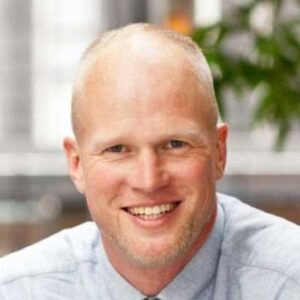
Adam Kreek
Thank you to everyone at Helm Operations who joined our recent keynote in Victoria. You showed up, you leaned in, and you took the time to reflect on who you are becoming inside a company that quite literally powers the companies and crews that work on water.
Helm is a rare mix: a tight-knit global team, deep maritime expertise, and software that keeps critical operations moving safely and efficiently. You are innovating in an industry that moves over 90% of the world’s cargo, while staying true to your small-company roots and values. That takes mettle.
Here’s a quick recap of our time together—and a nudge to keep going, and a link to the slides I made for you.
1) Motivation that moves boats, code, and careers
We started with a simple but uncomfortable idea: Motivation is not a dirty word. It’s what moves us.
The word “motive” traces back to the Latin motivus, “that which moves.” The suffix “-ation” comes from Latin -atio, meaning “the act or process of.” Put together, motivation is the process of being moved into action—to write one more line of code, support one more customer, or ship one more release that makes life easier for crews at sea.
At Helm, your work already has a powerful built-in motive: you build tools that enhance safety, boost performance, and drive meaningful change in maritime operations.When you connect your daily effort to that bigger motive, energy stops leaking and starts compounding.
Try asking yourself this week:
- What’s moving me into action right now?
- How does this sprint, ticket, or customer conversation make life better for someone on the water?
2) Confidence, Autonomy, Relatedness – the hidden engines of performance
We revisited Self-Determination Theory: the idea that high-quality motivation grows when three needs are met:
- Competence / Confidence – Am I good and getting better?
- Autonomy – Can I do it my way? Do I feel I have choice?
- Relatedness – Am I connected to what matters? Do I belong here?
We explored the Iceberg Model of Leadership:
- Below the waterline sit your drives, values, beliefs, needs, and personality.
- At the waterline is attitude. How you interpret those drives through the goals you set, the principles you apply, and the shadows you’re willing to uncover.
- Above the surface are your behaviours and results what your teammates actually see?
Leadership development at Helm means working all three layers:
- Owning your drives.
- Choosing a constructive attitude.
- Turning it into visible behaviours that support the mission and your team.
This week, notice:
- Where am I building real competence, not just staying busy?
- Where do I need a bit more autonomy and how can I ask for it constructively?
- Where can I strengthen relatedness by being just 10% more curious about my teammates?
For a deeper dive on motivation and these three needs, see our other writing on Self-Determination Theory and Mobilizing Goals on the blog.
3) Competing in a tougher market: Kaizen and Agile thinking
The maritime and tech landscapes are only getting more competitive. Helm is responding the right way: with incremental excellence, Kaizen, and Agile, small, steady, smart improvements that move the whole fleet forward.
We talked about:
- Kaizen – identifying problems, analysing processes, testing solutions, and standardizing what works.
- Agile loops – plan, do, check, act; sprint, review, learn, and sprint again.
The question isn’t “Will it get easier?” It’s “How can we get faster, smarter, and more adaptive—without burning out the team?”
A useful prompt:
- Where is one place I can “always be inching” this month—one feature, one process, or one relationship I can improve by 1%?
4) Relatedness and the “Disease of Me”
Helm is an innovative, ambitious team. Innovation creates friction. Change brings growing pains. That’s the work. That’s the hard.
We named the trap Pat Riley calls the “Disease of Me”:
- “Give me more credit.”
- “I deserve more.”
- “We lost, but I won.”
Any high-performing culture can drift there if we’re not careful, especially when we’re proud of what we build.
The antidote is believing in something bigger:
- The safety of crews on the water.
- The reliability of the global supply chain.
- The careers and lives of your teammates.
Practical ways to build relatedness at Helm:
- Take five minutes of real connection in your meetings:
- What’s something you’re looking forward to?
- Where do you feel momentum (or friction) right now?
- What’s one thing our team is doing well that we should keep doing?
5) Visualizing your future self at Helm and beyond
We closed by asking you to visualize your future self and the leader you’re becoming:
- The biggest long-term career impact you can imagine.
- The kind of teammate and technical leader you want to be known as.
- The contribution you want to make to the maritime industry.
Then we tied it back to today:
How will your current project at Helm help you get there?
Identity doesn’t change overnight. It evolves stroke by stroke, sprint by sprint, release by release. If we’re not growing, we’re sliding backwards. Progress is the point.
Your next Gold Medal Moment at Helm
You are part of a company that empowers a global, essential industry with innovative software, a culture of delivery, and a team that genuinely cares about people reaching their potential.
Now the question is:
What’s your next Gold Medal Moment at Helm and beyond?
Pick one idea that resonated with you from our time together:
- A motivation prompt you want to keep.
- A Kaizen or Agile tweak to try with your team.
- A relationship you want to strengthen.
- A habit that will build your competence and confidence.
Write it down. Share it with someone on your team. Take one small action this week. Then repeat.
You’re built for hard. You work in an industry that never stops moving. And you’re part of a company that’s committed to creating enduring value for customers, communities, and staff.
I’m grateful I got to row alongside you for a short stretch.
See you at your next Gold Medal Moment.
–––––
Adam Kreek and his team are on a mission to positively impact organizational cultures and leaders who make things happen.
Kreek is an Executive Business Coach who lives in Victoria, BC, near Vancouver, British Columbia, Canada. He is an Olympic Gold Medalist, a storied adventurer and a father.
He authored the bestselling business book, The Responsibility Ethic: 12 Strategies Exceptional People Use to Do the Work and Make Success Happen.
Discover our thoughts on Values here.
Want to increase your leadership achievement? Learn more about Kreek’s coaching here.
Want to book a keynote that leaves a lasting impact? Learn more about Kreek’s live event service here.