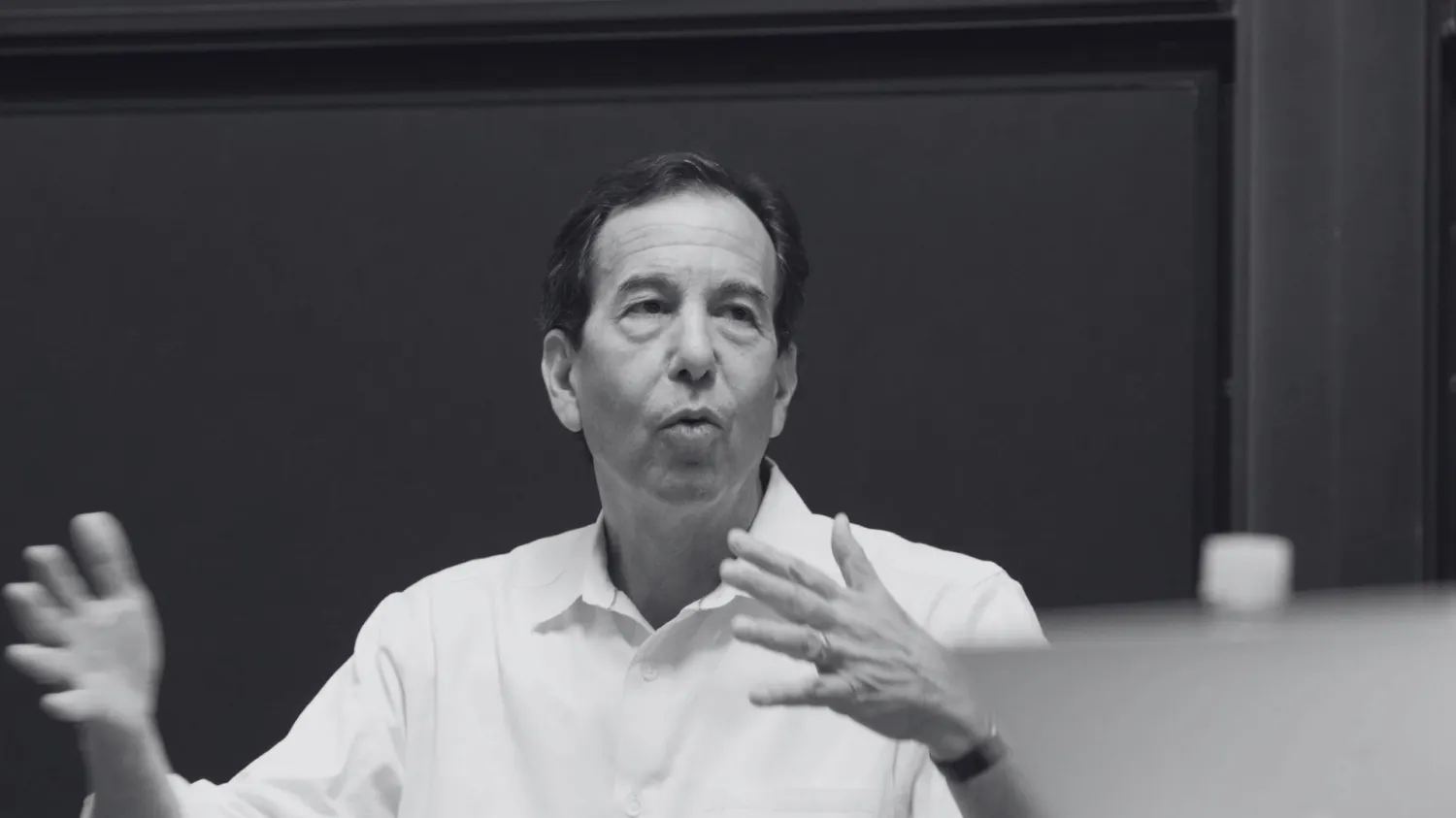
"What people resist is not change per se, but loss."
Ronald A. Heifetz
Co-creator of Adaptive Leadership
- Date
Adaptive Leadership: How to Lead When the Answer Isn’t Clear
posted in Uncategorized

Adam Kreek
Markets shift. Talent expectations evolve. Technology rewires workflows. And suddenly your tried-and-true approach stops producing results.
That moment—when the “right answer” isn’t obvious—is where Adaptive Leadership earns its keep.
Developed by Ronald Heifetz and colleagues at Harvard Kennedy School, Adaptive Leadership is a practical framework for mobilizing people to tackle complex challenges—especially the kind that cannot be solved by expertise alone.
The core idea is simple: some problems are technical. Others are adaptive.
The single biggest failure of leadership is treating adaptive challenges like technical problems.
Most leaders do this unintentionally. Quick answers feel competent. Control feels safe. Being the “solver” feels like leadership, until it stops working.
Technical vs. Adaptive: The Fastest Leadership Diagnosis You’ll Ever Learn
Before you choose a strategy, diagnose the type of challenge you’re facing.
Technical Challenges
Technical challenges have the following characteristics:
- The problem is clear or quickly definable
- The solution is known or can be provided by expertise
- Responsibility sits primarily with authorities or specialists
- Obstacles are usually resources such as time, budget, or capacity
Technical problems respond well to training, process improvement, hiring expertise, or applying best practices.
Adaptive Challenges
Adaptive challenges look very different:
- The problem is murky, emotional, and difficult to define
- The solution requires learning, experimentation, and behaviour change
- Responsibility sits with the people who are impacted—not just leadership
- The obstacles are values, loyalties, identity, and entrenched habits
Here’s a simple gut check:
If your team keeps asking you for answers you don’t actually have, you’re likely in adaptive territory.
Why Adaptive Work Feels Like Resistance
Adaptive challenges are not hard only because they are complex. They are hard because they involve loss.
When people adapt, they often have to let go of something:
- A familiar identity (“This is how we do it.”)
- Status or control
- A comfortable skill set
- A belief system that once worked
Adaptive change is distressing because it asks people to take on new roles, relationships, values, and approaches to work. Both leaders and teams must unlearn the habit of expecting the leader to provide the answer. I write about this briefly in another post where we explore immunity to change.
If you are facing resistance, don’t default to “they’re lazy” or “they don’t get it.”
Often, they get it.
They just don’t want the loss that comes with it.
The Six Practices of Adaptive Leadership
Heifetz and Laurie outline six leadership practices that enable adaptive progress. These are not soft skills. They are disciplined behaviours that build real capacity when the work gets messy.
1. Get on the Balcony
Step out of the noise long enough to see what is actually happening.
On the dance floor, you feel urgency, emotion, and pressure. On the balcony, you observe patterns:
- What keeps repeating?
- Where are we stuck?
- What conflict is sitting underneath polite conversation?
Adaptive leaders do not simply react to events. They diagnose the system.
Practical move: In your next leadership meeting, pause and ask, “What are we not saying that everyone can feel?”
2. Identify the Adaptive Challenge
Name the real issue—not the symptom.
Example:
Symptom: “Our managers aren’t holding people accountable.”
Adaptive challenge: “We’ve rewarded harmony over honesty for years, and now we need a culture that can tolerate direct feedback.”
Adaptive leadership clarifies what must change in behaviour, not just what must change in plans.
Diagnostic questions:
- What beliefs or habits must shift for this to work?
- What are people being asked to give up?
- What values are colliding here?
3. Regulate Distress
Adaptive work creates heat.
Too little heat and nothing changes. Too much heat, and people shut down, fight, freeze, or quit.
Leaders do not eliminate distress. They regulate it—creating a productive range where learning can happen without breaking the system.
Practical moves:
- Slow the pace through smaller experiments
- Name the losses honestly
- Build recovery into the cadence
Adaptive work is endurance work. If you run it like a sprint, you will burn out your best people.
4. Maintain Disciplined Attention
When adaptive work gets uncomfortable, organizations become inventive at avoidance.
They may:
- Chase shiny priorities
- Blame another department
- Restructure the org chart again
- Launch a new initiative
- Delay through endless discussion
That is work avoidance.
Adaptive leaders keep attention on the real issue long enough for learning to occur—even when it is tense.
Meeting move: When someone derails the conversation, ask, “Is this the work, or is this the avoidance?”
5. Give the Work Back to the People
This is where many leaders struggle. It feels like abdication. It is not.
In adaptive situations, the leader cannot solve the challenge alone. Progress requires stakeholders to do the learning and behaviour change.
If you keep rescuing the team, you train helplessness.
If you keep holding the work, you become the bottleneck.
Language shift:
Instead of: “Here’s what we’re going to do.”
Try: “Here’s what we’re facing. What do you think we need to try next?”
This echoes some of the lessons we discuss in the SCARF model of influence.
6. Protect Voices of Leadership From Below
Adaptive solutions rarely come from the highest-paid person in the room.
They often come from:
- The frontline
- The dissenters
- The uncomfortable truth-tellers
- The people closest to reality
Those voices can be marginalized or silenced.
Adaptive leaders protect them and legitimize them.
Simple practice: Rotate a “Red Team” role in meetings. Their job is to challenge assumptions, name risks, and surface blind spots—not to be negative, but to keep the system honest.
A Practical 30-Day Adaptive Leadership Cycle
If you want to apply this model immediately, use the following five-step cycle over the next month.
Step 1: Name the Challenge
Write one clear sentence:
“We are facing an adaptive challenge of ________.”
If you cannot name it, you are not ready to solve it.
Step 2: Map the Losses
List what people might fear losing:
- Control
- Competence
- Reputation
- Comfort
- Identity
- Certainty
Loss drives resistance.
Step 3: Choose One Small Experiment
Adaptive work advances through discovery:
- Pick one behaviour shift to test
- Time-box it for two weeks
- Decide how you will measure learning
Step 4: Create a Holding Environment
You do not need therapy sessions. You need structure:
- Clear goals
- Respectful conflict norms
- Feedback loops
- Psychological safety for truth-telling
Step 5: Review and Learn
Ask weekly:
- What did we try?
- What did we learn?
- What are we changing next?
Adaptive leadership is not a one-time fix. It is a learning system.
The Bottom Line
Adaptive Leadership is for the moments when:
- The solution is not known
- Behaviour must change
- Values collide
- People resist because the losses are real
If you want a team that can thrive in volatility, stop trying to be the hero with the answers.
Be the leader who builds the capacity to learn.
The work is not getting simpler. The leaders who succeed will be the ones who can mobilize people through uncertainty—not around it.
Key Research Sources Used
Heifetz, R. & Laurie, D. (2001). “The Work of Leadership.” Harvard Business Review.
https://hbr.org/2001/12/the-work-of-leadership
Heifetz, R., Grashow, A., & Linsky, M. (2009). The Practice of Adaptive Leadership. Harvard Kennedy School.
https://www.hks.harvard.edu/publications/practice-adaptive-leadership-tools-and-tactics-changing-your-organization-and-world
Harvard Medical School Professional Development. “Adaptive Leadership: Making Progress on Intractable Challenges.”
https://learn.hms.harvard.edu/insights/all-insights/adaptive-leadership-making-progress-intractable-challenges
University of Chicago National Center for Systems. “Technical Problems vs. Adaptive Challenges.”
https://ncs.uchicago.edu/sites/default/files/uploads/tools/NCS_PS_Toolkit_DPL_Set_B_TechincalProblems.pdf
Harvard Kennedy School Faculty Research on Adaptive Leadership and Decision-Making Under Uncertainty.
https://www.hks.harvard.edu/faculty-research/policy-topics/public-leadership-management/hks-faculty-teach-leaders-how-make
–––––
Adam Kreek and his team are on a mission to positively impact organizational cultures and leaders who make things happen.
He authored the bestselling business book, The Responsibility Ethic: 12 Strategies Exceptional People Use to Do the Work and Make Success Happen.
Want to increase your leadership achievement? Learn more about Kreek’s coaching here.
Want to book a keynote that leaves a lasting impact? Learn more about Kreek’s live event service here.